
Artist Highlight: Luján Candria
Miami-based Argentine artist Luján Candria works across a wide range of media to create introspective works that explore memory, reminiscence, and oblivion. Luján often uses the repetition and juxtaposition of images to create intimate and poetic narratives imbued with nostalgia.
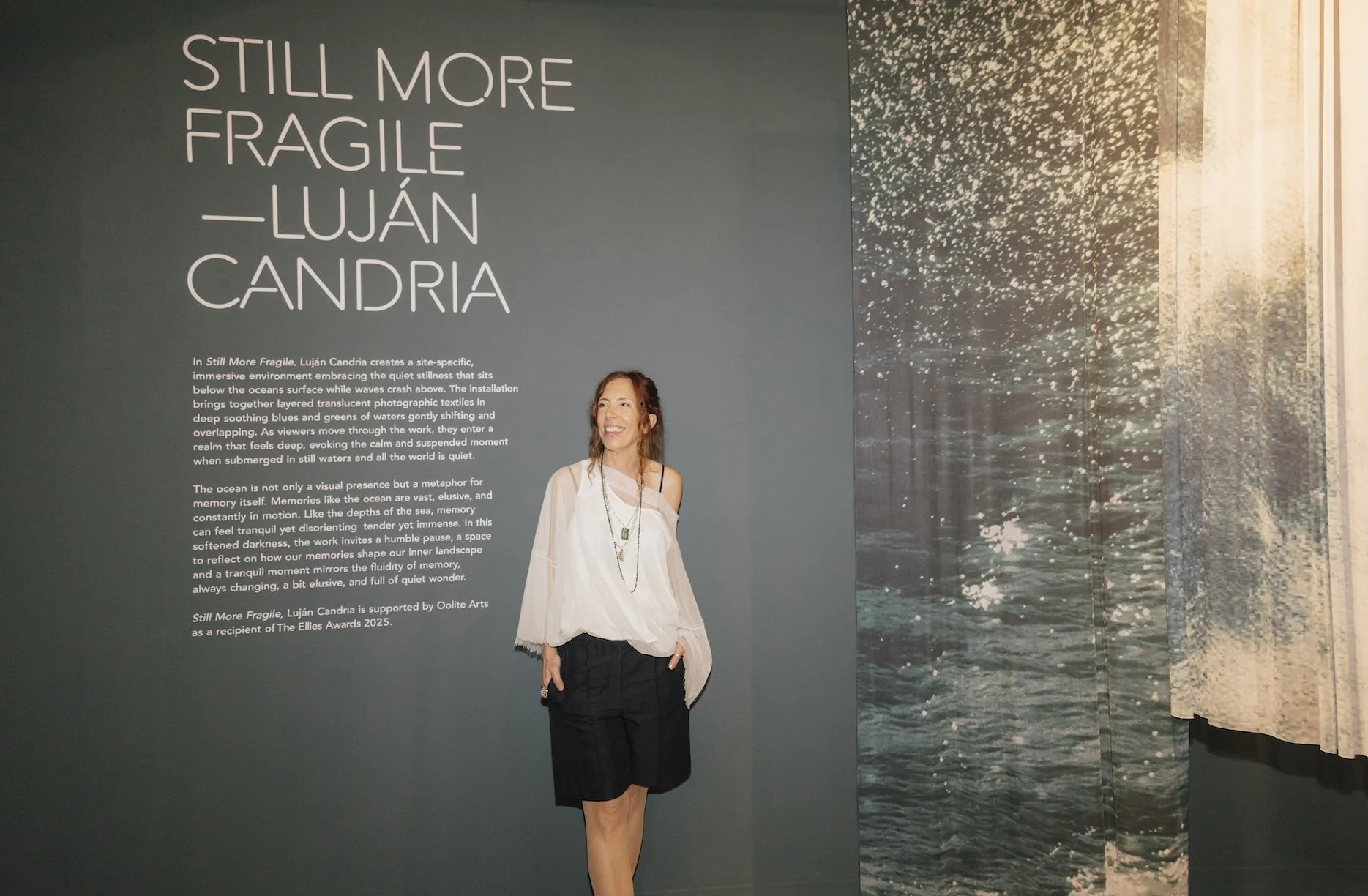
Luján has been a resident artist at Bakehouse since 2021. To experience more of her work, visit her studio here at Bakehouse, or see Still More Fragile, her solo exhibition currently on view at Faena Art through May 3.
Can you tell us about your artistic practice?
My artistic practice explores the dynamic relationship between memory and the landscapes that shape our sense of belonging, using a poetic visual language across photography, video, sound, and textiles. Photography remains central to my work, but I approach it as a material to be transformed rather than a document. Through layering, fragmenting, and reconfiguring images, I create compositions that reflect the fluid and unstable nature of memory—something that is constantly shifting, incomplete, and open to reinterpretation.
In recent years, I have returned to my background in sculpture, expanding my practice into large-scale installations to create immersive environments. These works invite viewers to move through space and engage with images in a more embodied way, allowing perception to shift.
What role does memory play in your creative process? Are you working more from feeling or visual recall?
Memory is central to my practice, not as something fixed or archival, but as something fluid and constantly transforming. I’m less interested in reconstructing specific images from the past and more in working from a feeling—an atmosphere or emotional trace that remains over time.
My process is intuitive and poetic. I often begin with a sensation or a mood rather than a clear image, allowing forms and compositions to emerge through layering and repetition. In this way, memory becomes less about recall and more about presence—something that is felt rather than seen, and that continues to shift as it is revisited.
In your artist statement. You describe that your work speaks about oblivion. What does oblivion mean to you in relation to using photography?
For me, oblivion is not simply about forgetting, but about transformation. It is the space where images begin to dissolve, where memory loses clarity and becomes something more fluid and open. In that sense, oblivion is not an absence, but a condition of change.
Photography traditionally carries the idea of preservation—of fixing a moment in time. When I first began working with photography, I was interested in capturing and holding a fleeting moment. Over time, however, my work has moved in the opposite direction. I’m interested in what happens when the image begins to fade, fragment, or shift—when it resists being fixed. Through layering, repetition, and manipulation, I allow the image to move toward a state of dissolution, becoming less descriptive and more atmospheric.
In this way, oblivion becomes a poetic space. It allows the image to detach from a specific time or place and to exist instead as a trace—something that is felt rather than clearly remembered.
Do you have a material relationship to using fabric in your work when producing your photographs? Can you express a bit of the conceptual connection that is tied to this process?
Yes, my relationship to fabric is both material and conceptual. Working with textiles has allowed me, as I mentioned before, to return to my sculptural roots and engage with space in a more physical and expanded way. Fabric is flexible, responsive, and inherently unstable—it moves, folds, and shifts in relation to its environment. This quality is important to me because it introduces a condition of change into the work.
Conceptually, this aligns with my interest in transformation and fluidity. The textile surface carries the image in a way that resists permanence, allowing it to shift, adapt, and remain open.
It holds the possibility of appearing and disappearing, of being continuously reconfigured. In that sense, fabric is not only a support, but an active element in the work: a material that embodies change.
Tell us about your process in creating images. Where does it start for you between the camera, the place, and personal process you take in choosing the image for a produced body of work?
My process begins with a sensation—something atmospheric or emotional that I want to explore. I photograph landscapes or fragments of nature, gathering material rather than trying to capture a definitive image.
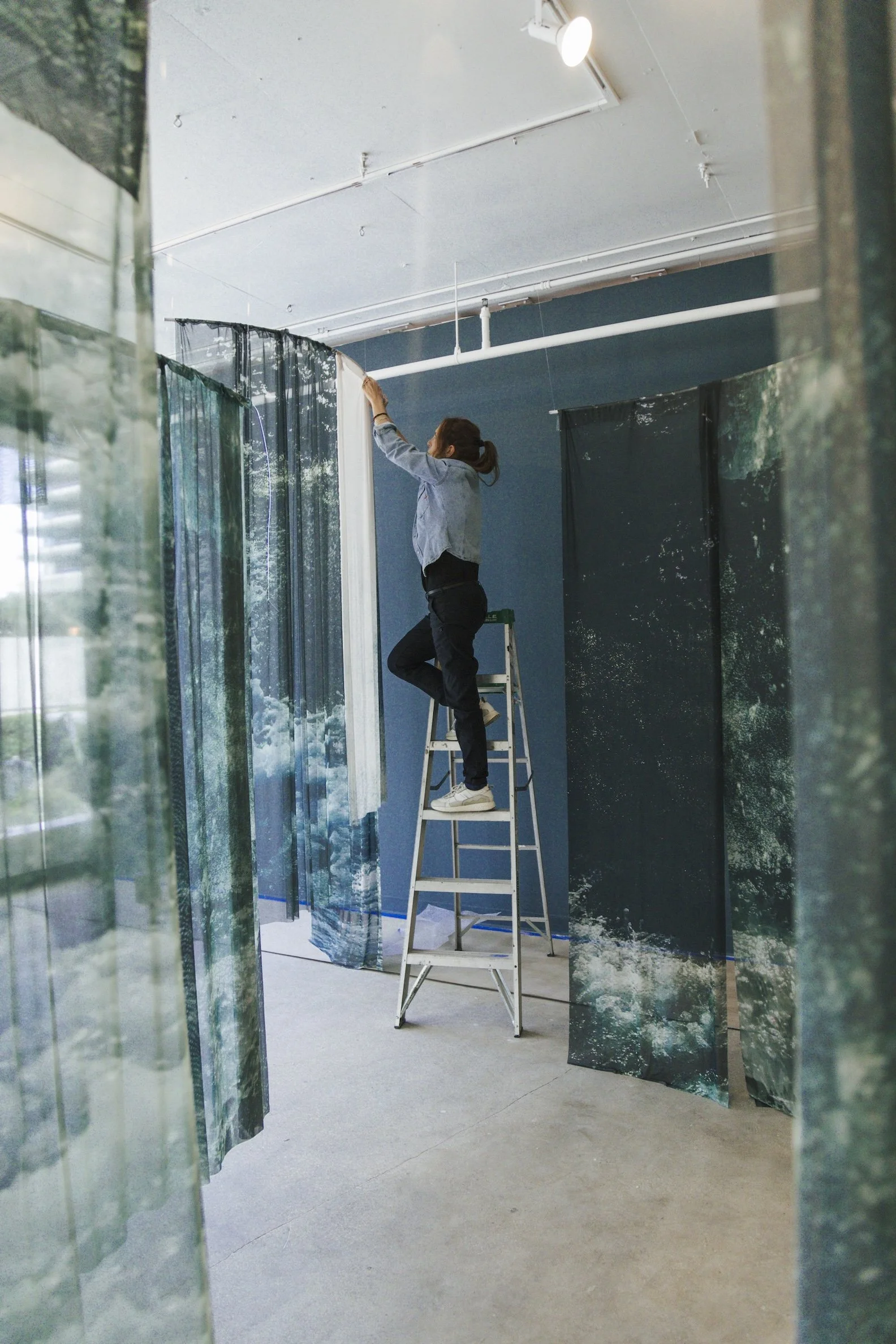
The selection process is gradual and intuitive. I return to the images over time, allowing certain ones to emerge through a kind of resonance that is more felt than descriptive. From there, I begin to manipulate, layer, and reconfigure them, moving away from representation and toward something more open.
Tell us about a personal artistic project or body of work that you are currently excited about:
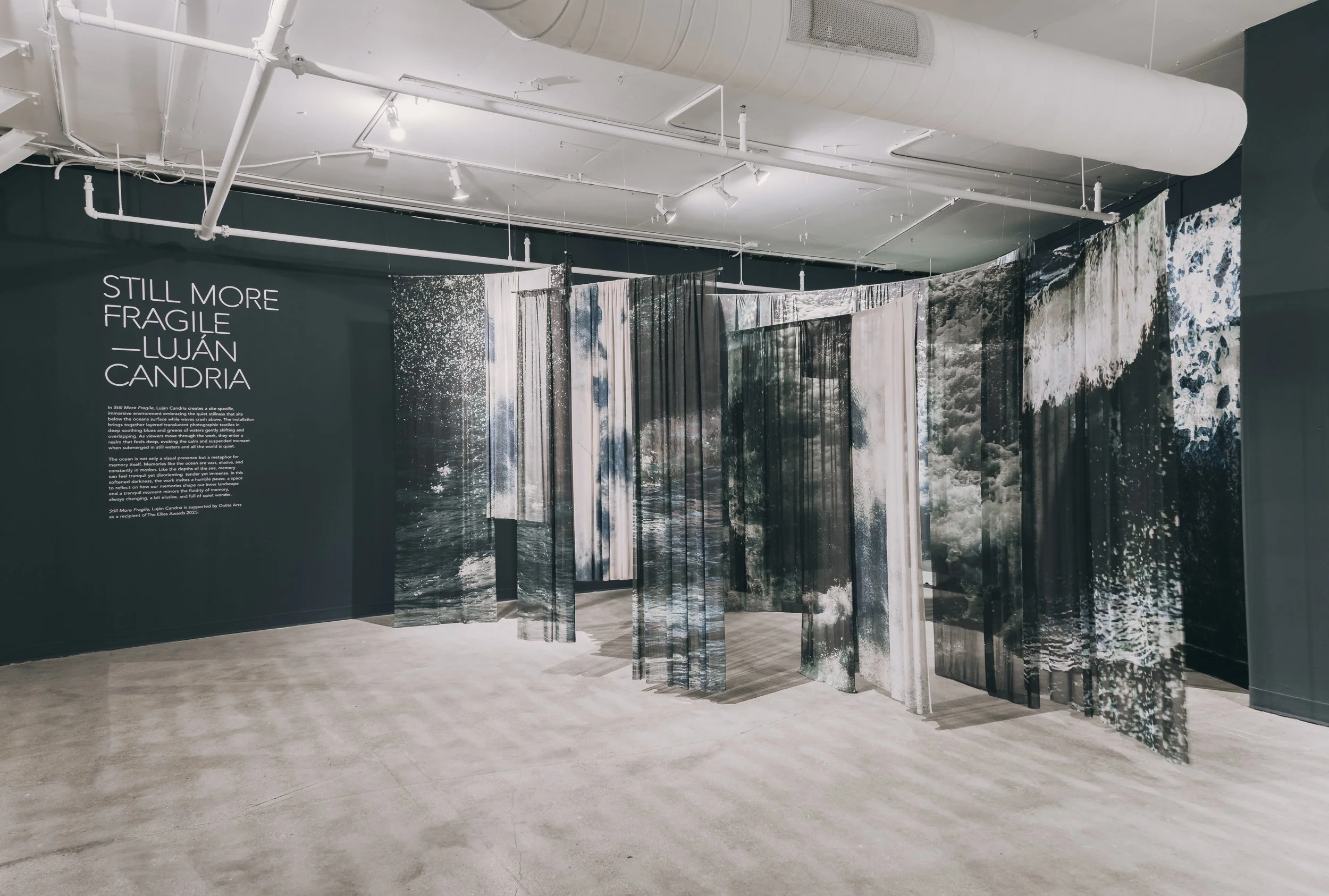
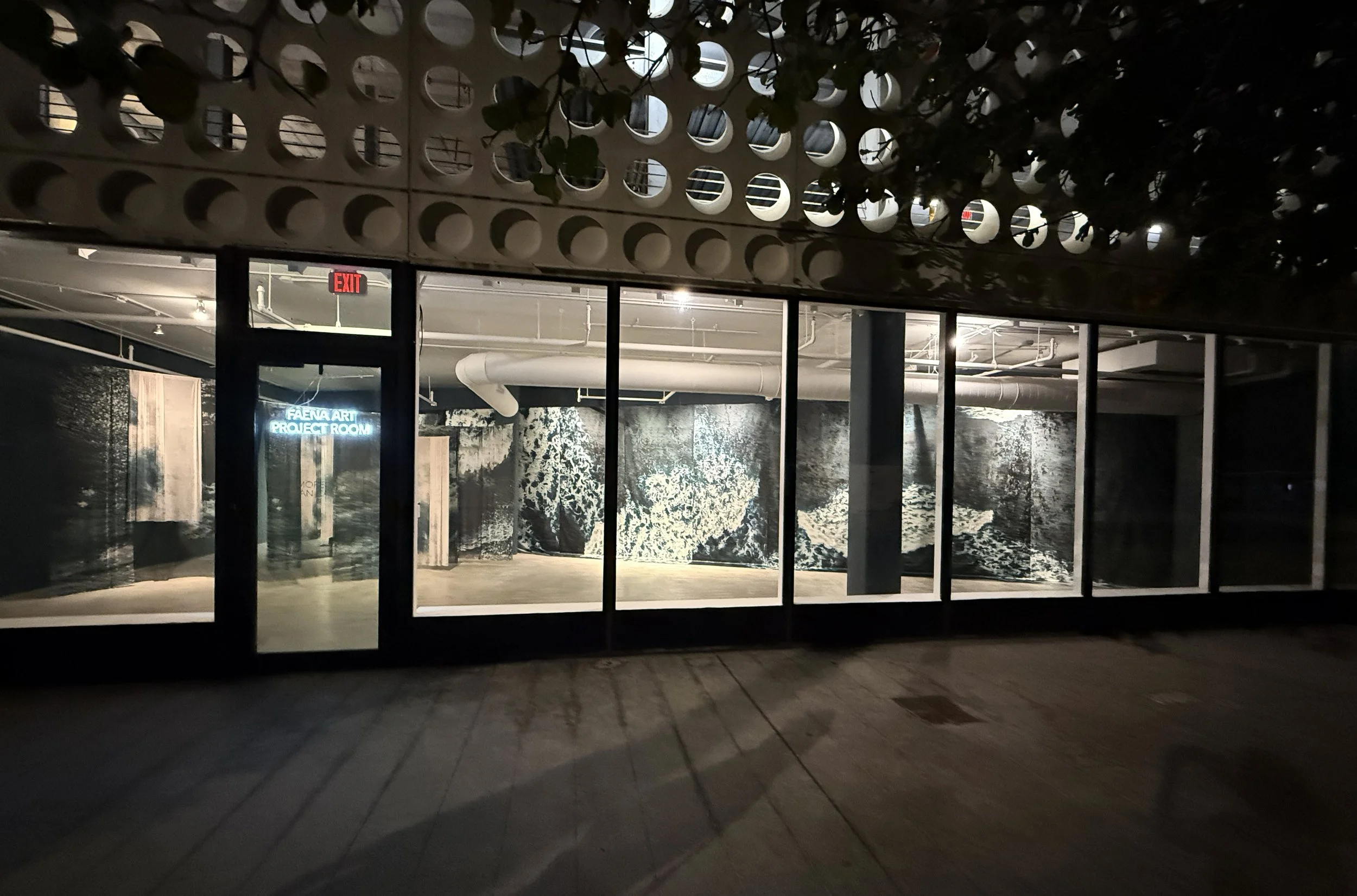
I’m currently very excited about Still More Fragile, a site-specific immersive installation at the Faena Art Project Room. The project brings together an extensive body of large-scale photographic textiles, sound, and video, and marks an important moment in the development of my work, produced at Bakehouse and supported by The Ellies Award.
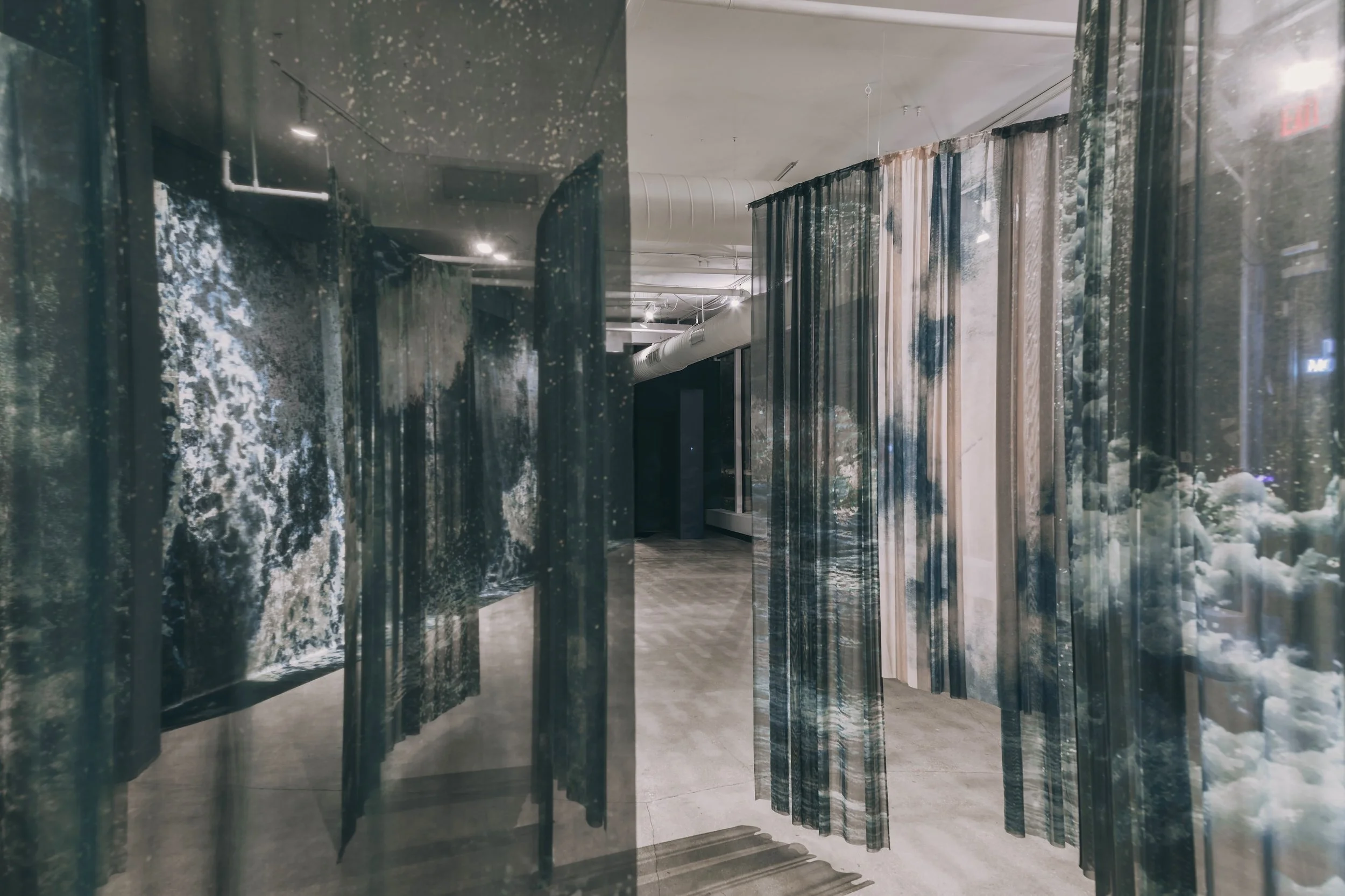
Here, I approach the sea as both a visual and conceptual presence—something vast and powerful, yet deeply vulnerable. Through layered, translucent photographic textiles, I create an environment that shifts with light, movement, and the presence of the viewer.
What interests me most in this project is the possibility of expanding photography into space. It becomes a way of constructing an atmosphere—one that reflects on change and our relationship with the natural world.
How do you feel your art practice has developed or changed over the last years? Does Bakehouse play a role in this? Tell us about how you have developed as an artist since you began working at Bakehouse:
Working at Bakehouse has been fundamental to the development of my practice. Having consistent access to a studio has allowed me to take on projects that require time, scale, and sustained experimentation.
Since joining Bakehouse, I began working with installation, gradually expanding into large-scale projects. Highlights of my residency include my solo exhibition at the Miami Beach Botanical Garden, a solo show at the Gallery of the Consulate General of Argentina in New York, and my current exhibition at the Faena Art Project Room.
Equally important has been the sense of community. Being surrounded by other artists has encouraged dialogue, exchange, and critical reflection, helping me clarify my ideas and push my work further. This collective environment has strengthened my conceptual thinking, expanded my professional network, and supported the continued growth of my practice.
I’m very grateful to be part of it.
How do you stay inspired and motivated in your work?
I stay inspired by remaining attentive to my surroundings and to my own internal processes. Nature, movement, and light are constant sources, and I try to maintain a balance between observation and introspection, as well as between experimentation and production.
At the same time, motivation comes from the discipline of working consistently. Even when things are not fully resolved, I continue to show up in the studio. The process itself generates new ideas, and over time, that continuity creates momentum.
From your perspective, can you describe why art practices like the ones at Bakehouse are important to have in Miami?
Spaces like Bakehouse are essential because they offer something that is often limited in Miami: affordable space, continuity, and the conditions necessary to develop work beyond immediate visibility. In a context that can be heavily driven by events, market dynamics, and short-term exposure, having a space dedicated to process and experimentation becomes especially important.
Bakehouse creates an environment where artists can sustain long-term inquiry and take risks. At the same time, it fosters a strong sense of community and exchange, generating opportunities for dialogue between artists, the art world, and the public. This contributes to a more grounded and critically engaged cultural ecosystem.
How do you define success as an artist?
For me, success is not only about visibility or recognition, but about the ability to remain meaningfully engaged with my practice. It is about continuing to grow, taking risks, and developing work that feels honest and necessary. Success also means being able to sustain a practice over time, maintaining both curiosity and commitment.
You have been an established artist for the last 20 years, and a Studio Artist with Bakehouse for 5 years. What advice would you impart on emerging artists now?
I would say to trust your process and allow your work to develop over time. It’s important to stay committed to exploration and experimentation, and to be patient with how the work evolves.
At the same time, building a community and maintaining dialogue with others is essential. Being open to feedback, while staying true to your own voice, helps build a more sustainable and resilient practice.
What do you hope to achieve in your career as an artist in the next five years?
In the next five years, I hope to continue expanding my work into more ambitious projects, developing projects that engage more deeply with space, and remaining open to new possibilities.
I’m also interested in strengthening my international presence and building new collaborations that allow the work to evolve across different contexts.
Do you have any upcoming exhibitions?
I recently opened my solo exhibition Still More Fragile at the Faena Art Project Room in Miami. This project marks an important moment in my practice. It is a large-scale immersive installation that integrates an extensive body of photographic textiles, sound, and video, reflecting many of the ideas and media I’ve been developing over time.
I’m currently continuing to advance this body of work and exploring opportunities to present it in new contexts.