
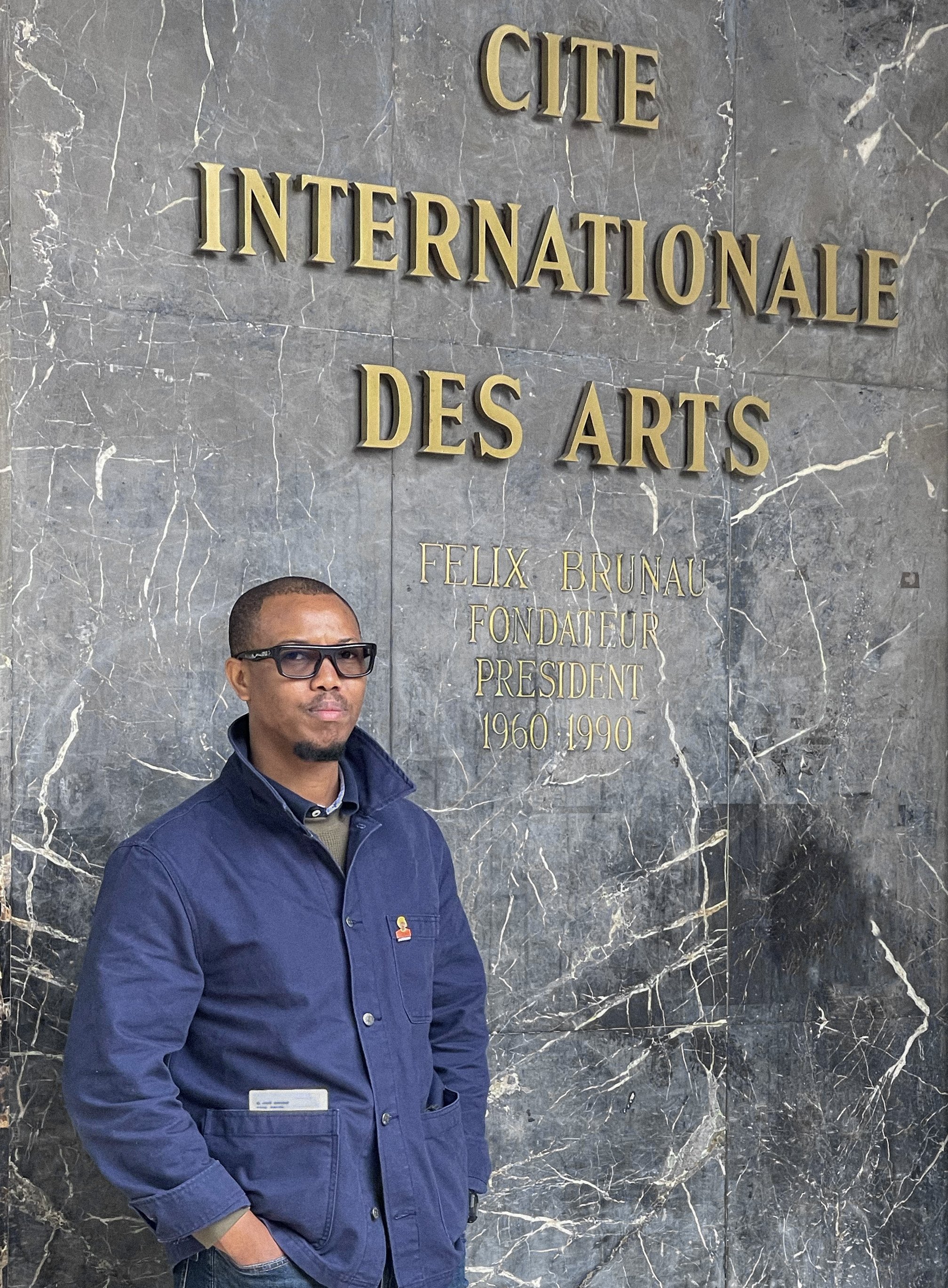
Image: Francisco Maso at the Cité. Photo by Aldeide Delgado.
Francisco Masó is a Cuban-born, Miami-based AfroLatinx conceptual artist whose work examines power, surveillance, civil rights, and the systems that shape everyday life.
“My work examines contemporary understandings of ‘unconscious behaviors’ and challenges what society accepts as natural, necessary, or normal. Critical observation and archival research, particularly the study of photographs produced at sites of conflict, inform long-term projects that draw formally from Latin American geometric abstraction, instructional photography, and contemporary dance,” (Francisco Masó).
In this Artist Highlight, Masó reflects on this research-driven practice and his recent residency at Cité internationale des arts in Paris, offered in partnership with Bakehouse Art Complex.
Alongside this discussion of his practice, Masó shares personal insights into sustaining a creative practice, defining success, and creating work that extends beyond the gallery to engage broader social questions.

Image: The Coronation of the Gladiolus. Photo by Zaire Aranguren.
Can you tell us about your artistic practice?
FM: My work explores the contemporary understanding of “unconscious behaviors” and challenges what society accepts as natural, necessary, and normal. As a conceptual artist trained at the Higher Institute of Art and the Behavior Art School in Havana, I examine power and the intersections of blackness, civil rights, and the police system through the lens of my experiences living in Cuba, Japan, and the United States. My artistic process begins with critical observation and extensive research into photographs made at sites of conflict. These investigations inform bodies of work that draw formal inspiration from Latin American geometric abstraction, instructional photography, Japanese calligraphy, and contemporary dance.
What role does sociology and power dynamics play in your creative process?
FM: More than sociology, I think my work is closer to research-based journalism in the sense that it is a deeply solitary process. I often find myself working late into the night investigating patterns of violence and techniques of soft power that are typically obscured to the untrained eye. The gaps and contradictions I identify within systems of police control become the raw material for long-term projects that ultimately seek to be useful and, potentially, to intervene in the field of the real.
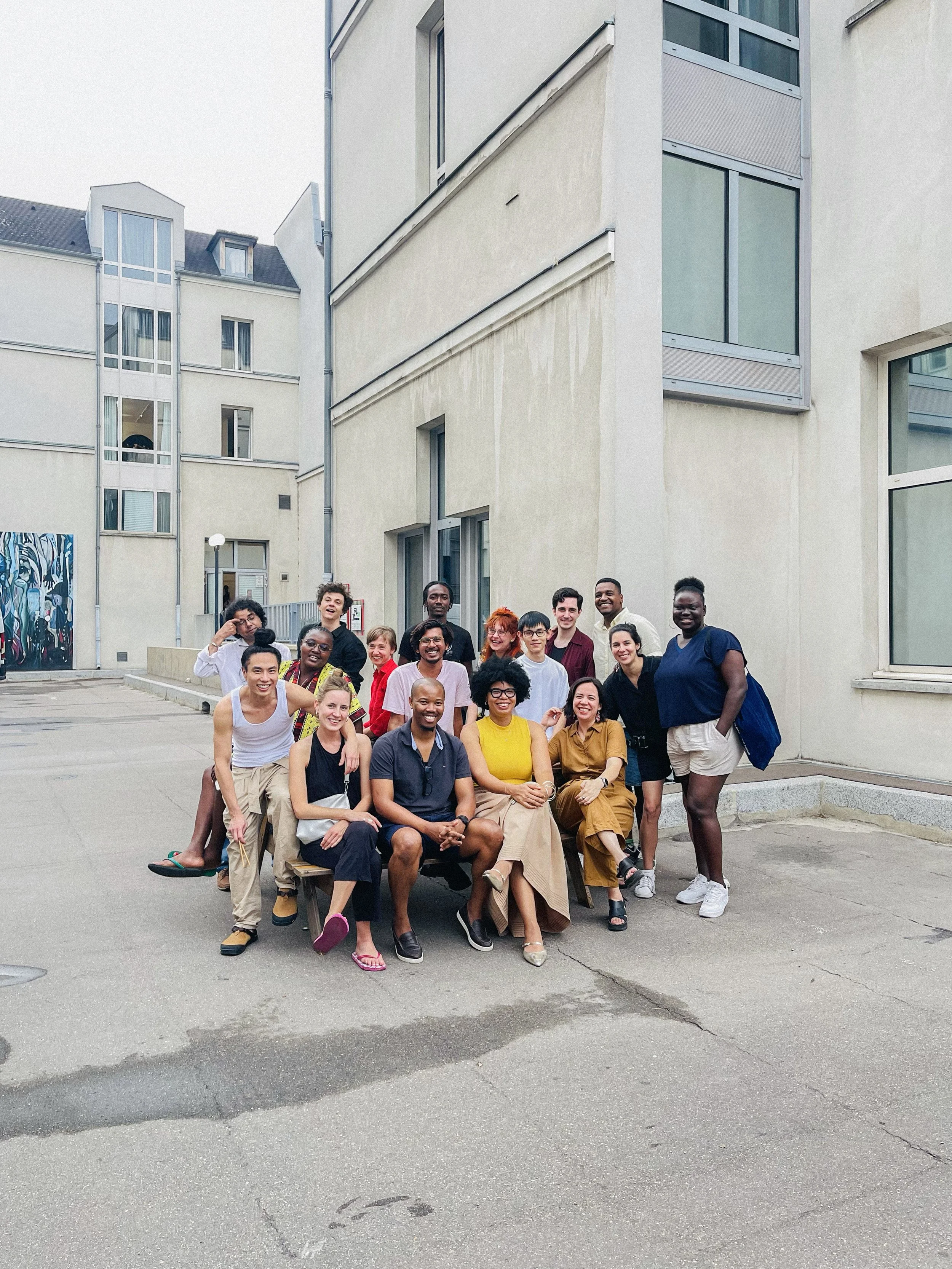
Image courtesy of the artist.
Tell us about how you spent your time in the Cité internationale des arts residency program.
FM: I arrived at the Cité internationale des arts on May 4 with a clearly defined project and scope of work, while remaining open to the unexpected encounters that would eventually shape my residency. From the beginning, I was aware that I was experiencing a historic moment in my life. Being at the Cité felt like a privilege, especially knowing that so many extraordinary artists from around the world have called this place home.
During my first week, I attended an orientation meeting followed by a welcoming reception with the new residents: artists from South Korea, Sudan, Nicaragua, Singapore, Cameroon, Canada, Austria, Ecuador, Sri Lanka, and many other countries. The Cité hosts around 300 studios, creating an exceptional environment for exchange. Every Wednesday, artists open their studios, offering opportunities to discover one another's work, engage in dialogue, and build new collaborations. Long conversations over spontaneous meals in the courtyard or in each other's studios became a defining part of my experience in this creative community. For my first Open Studio on June 10, I prepared a meal inspired by Caribbean flavors to share with fellow residents. The menu included poulet au gumbo and lentilles au saucisson, turning the evening into a space for conversation through food as much as through art.
Equally important was immersing myself in the cultural and historical fabric of Paris. I treated the city as an extension of my studio, making pilgrimages to sites that resonated with my research, including Van Gogh's houses and the Wifredo Lam estate. At the latter, I had the opportunity to meet members of Lam's family and conduct research in the estate's archives, learning more about his experiences as a Caribbean artist navigating the cultural landscape of Paris. During my stay, I visited more than twenty museums. Although two months were far from enough to see everything the city has to offer, I immersed myself in its extraordinarily vibrant cultural ecosystem. I was particularly interested in the city's Asian influences through its food, art, flea markets, shops, and communities, which opened unexpected paths of reflection within my own practice.
Alongside these experiences, I maintained an intensive studio practice, producing approximately fifty drawings and more than one hundred new photographs. I presented this new body of work, together with selections from my photographic archive, during my second Open Studio on July 8, where I welcomed around thirty fellow artists, curators, and local visitors. I left the Cité grateful to have been part of its community and deeply inspired to keep working on my project.
Your initial proposal for the Cité residency included a research into Afro-Asian connections through an individual photo-performance. Could you tell us a bit more about why you were interested in this topic and how the residency shaped the final culmination of your photo-performance?
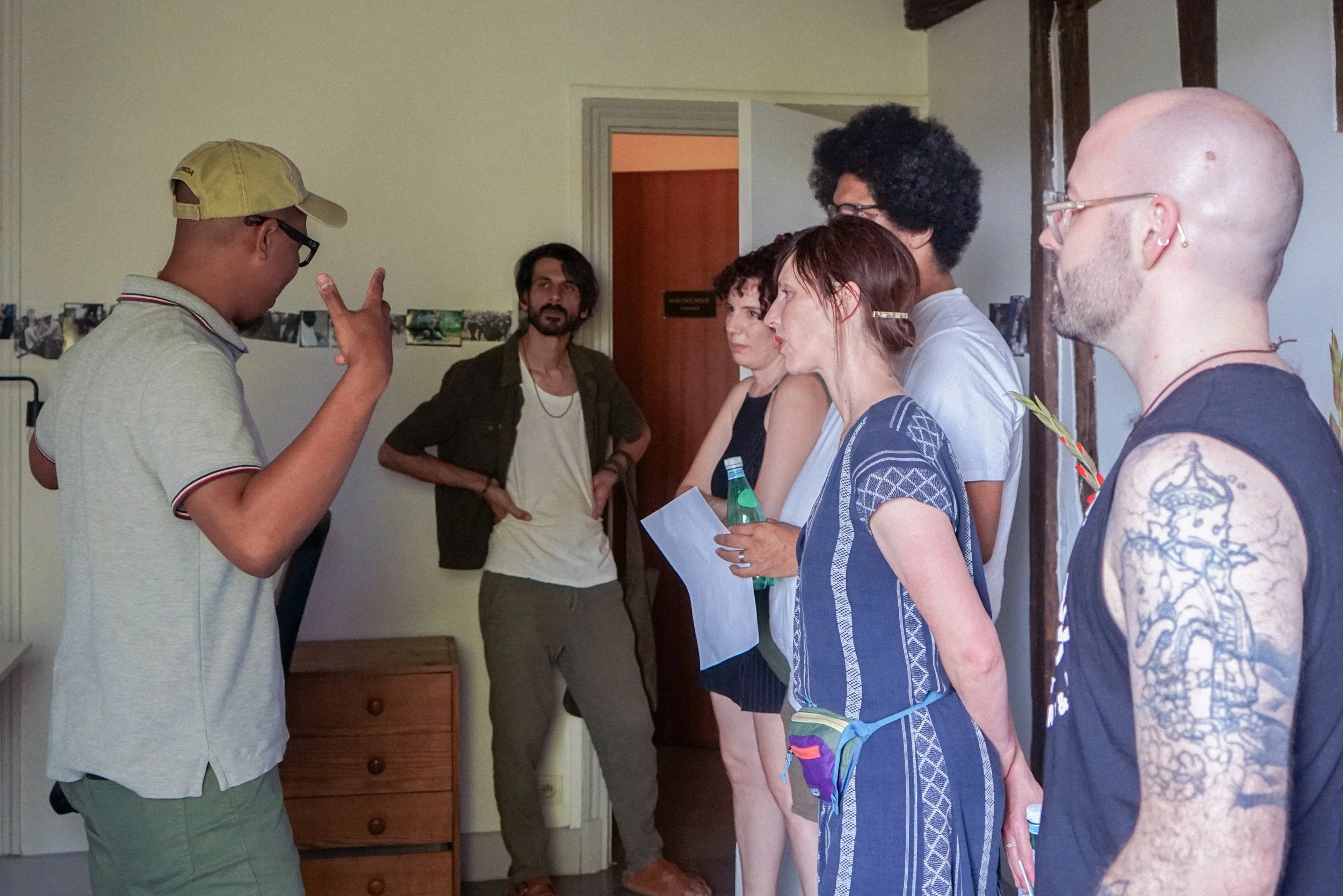
Image: Open studio at the Cité. Courtesy of the artist.
FM: During the residency, I worked on my series It's Better to Light a Candle Than to Curse the Darkness, which employs individual photo-performance to create a logographic language of protest rooted in my Asian heritage. This series allows me to represent the experiences of dissenting bodies and navigate the systems of censorship and surveillance they encounter. By integrating my Japanese language studies from my time in Cuba and Japan, the long history of cultural exchanges between Japan and France, and the opportunities offered by Paris's rich photographic ecosystem, the residency allowed me to expand the project and introduce new symbolic elements into the work.
How do you stay inspired and motivated in your work?
FM: I stay inspired and motivated by a deep, ontological desire to access knowledge and truths. I listen to music, films, and lectures while I work, and I always have a book by my side before going to sleep. Traveling is another constant source of inspiration.

Image: The Coronation of the Gladiolus. Photo by Zaire Aranguren.
You were recently awarded the 12th annual Florida Prize in Contemporary Art (2026). Tell us about your work, “The Coronation of Gladiolus,” that was selected for this prestigious exhibition.
FM: The Coronation of Gladiolus is a project I conceived about a year ago, so it was incredibly meaningful to finally bring it to life. I'm deeply grateful to the Orlando Museum of Art, curators Coralie Claeysen-Gleyzon and Katherine Page, and the entire museum team for believing in the work and creating the conditions for it to happen.
The installation brings together folding screens, paper chains, flags, paintings, music, and fragrance to create an immersive environment inspired by Cuban public demonstrations. The title references Jacques-Louis David's The Coronation of Napoleon, but instead of celebrating imperial power, the work places a single gladiolus at the center, an emblem carried by Cuban dissidents and political activists. Historically associated with courage and moral integrity, the flower becomes a quiet but powerful symbol of resistance.
I wanted the installation to function both as a monument and as a photographic event. At first, visitors encounter a space that feels festive—bright colors, sound, banners, even the atmosphere of a public celebration. But as they spend time with the work, they begin to recognize that each element carries another meaning. The paper chains, flags, striped paintings, and surveillance imagery reveal a landscape shaped by policing, control, and the choreography of state power. That gradual shift—from celebration to unease—is central to the experience I wanted to create.
For me, the work asks how power disguises itself through spectacle and ritual, and how symbols of resistance can quietly transform public space. Rather than offering a direct narrative, the installation invites viewers to move through it, make connections, and discover those layers for themselves.
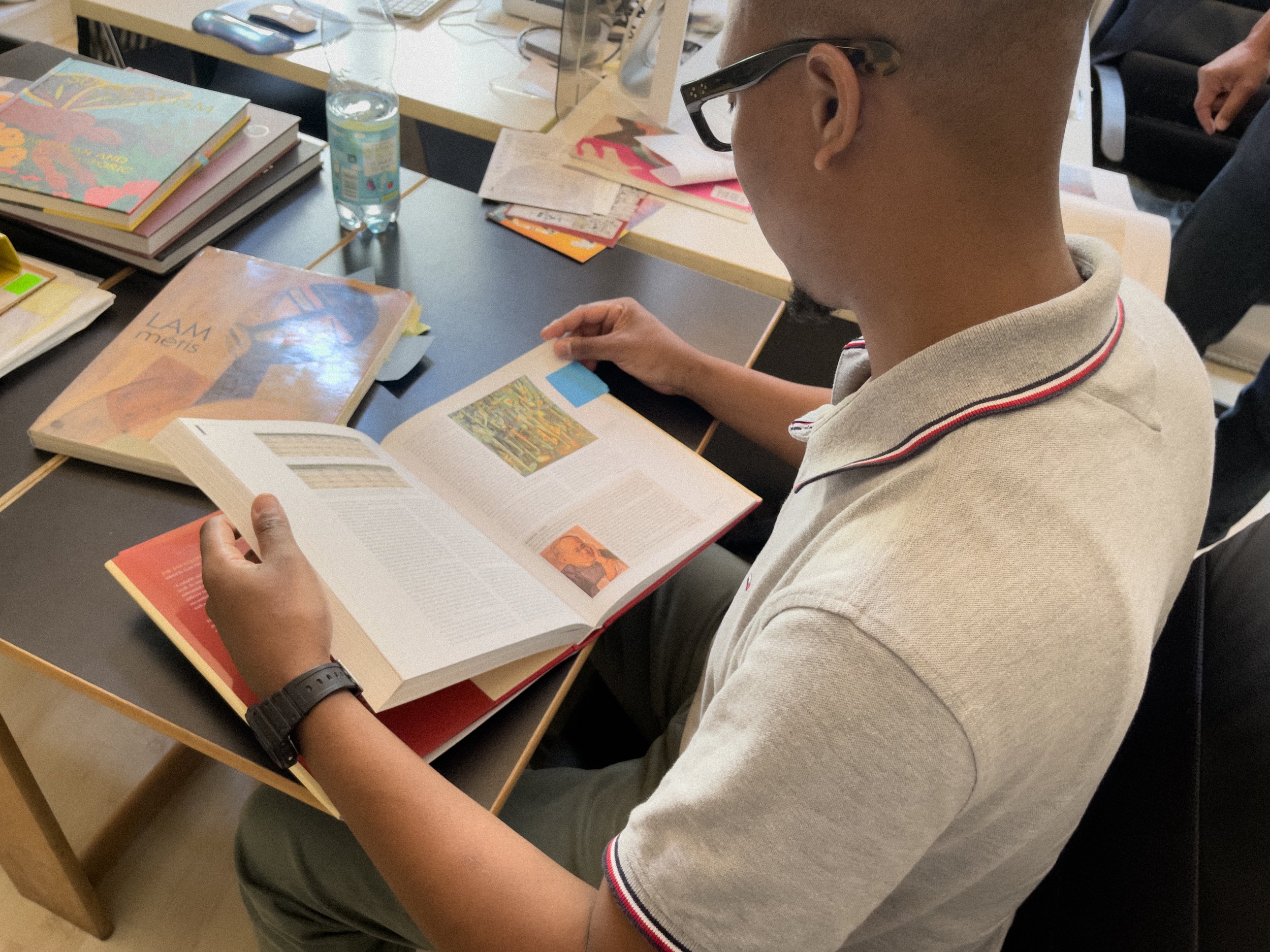
Image: Francisco Maso at Wifredo Lam Estate. Photo by Aldeide Delgado.
How do you define success as an artist?
FM: I probably have more than one answer to that question, but one of the main ways I define success is in relation to the social function of my work. For me, success means creating work that extends beyond the art world: work that can serve as testimony, evidence, or a resource for other fields and practices. I want it to have a life beyond the white cube and contribute, in some way, to how we understand the world.
On a more personal level, success also means being able to live a dignified life doing what I love. It means earning a living through my practice while having the freedom to keep researching, experimenting, and taking creative risks. Success also means being able to support the next generation of artists by creating institutions and opportunities while giving back to the communities that have shaped my own journey.
You have been an established artist for several years, and an associate artist with Bakehouse for almost a year now. What advice would you impart on emerging artists now?
FM: I try to avoid these kinds of classifications because, among artists, these hierarchies don't really exist. You're simply another creator, constantly learning and evolving.
If I could offer one piece of advice, it would be to keep making the work because you genuinely love it, not because you're expecting recognition or a reward. Enjoy the process as if no one were ever going to pay you for it, because the greatest reward is the experience of creating itself.
Do you have any upcoming exhibitions?
FM: Yes, I have some upcoming exhibitions, but I can't announce them just yet. If you'd like to learn more about my practice, follow me on Instagram, @fcomaso, as that's where I usually share news about upcoming projects. I'm also always up for a good conversation in the studio, so don't hesitate to reach out if you'd like to schedule a visit. In the meantime, you can see my work in the Florida Prize exhibition at the Orlando Museum of Art through August 30.
About the Artist:
Francisco Maso (Havana, 1988) is a Cuban-born, Miami-based, AfroLatinx conceptual artist. He received a Bachelor degree in Stage Design from the Instituto Superior de Arte (2014). He also graduated from both Behavior Art School (2009), led by Tania Bruguera, and the San Alejandro Academy of Fine Arts (2007). Maso’s work delves into the contemporary understanding of “unconscious behaviors” and challenges what is accepted by society as natural, necessary, and normal. As a conceptual artist, he examines the concept of power and the relationships between blackness, civil rights, and the police system through his personal experiences in Cuba, Japan, and the United States.
“My work examines contemporary understandings of ‘unconscious behaviors’ and challenges what society accepts as natural, necessary, or normal. Critical observation and archival research, particularly the study of photographs produced at sites of conflict, inform long-term projects that draw formally from Latin American geometric abstraction, instructional photography, and contemporary dance. During the Bakehouse Art Complex x Cité internationale des arts Residency, I aim to deepen my exploration of Afro-Asian connections through individual photo-performance. I am deeply grateful to the Bakehouse, the Cité, and everyone involved in creating and facilitating this transformative experience. This residency represents a timely and meaningful opportunity to further position my work within an international context, especially during the year-long celebration marking the 200th anniversary of the invention of photography. It offers both validation and the freedom to develop new work while building professional relationships that can support future presentations and institutional collaborations around my practice.”
The Coronation of Gladiolus, an immersive installation that transforms the gallery into a theatrical environment where celebration and spectacle give way to a deeper meditation on surveillance, state violence, and coded systems of oppression.