
Artist Highlight: Beatriz Chachamovits
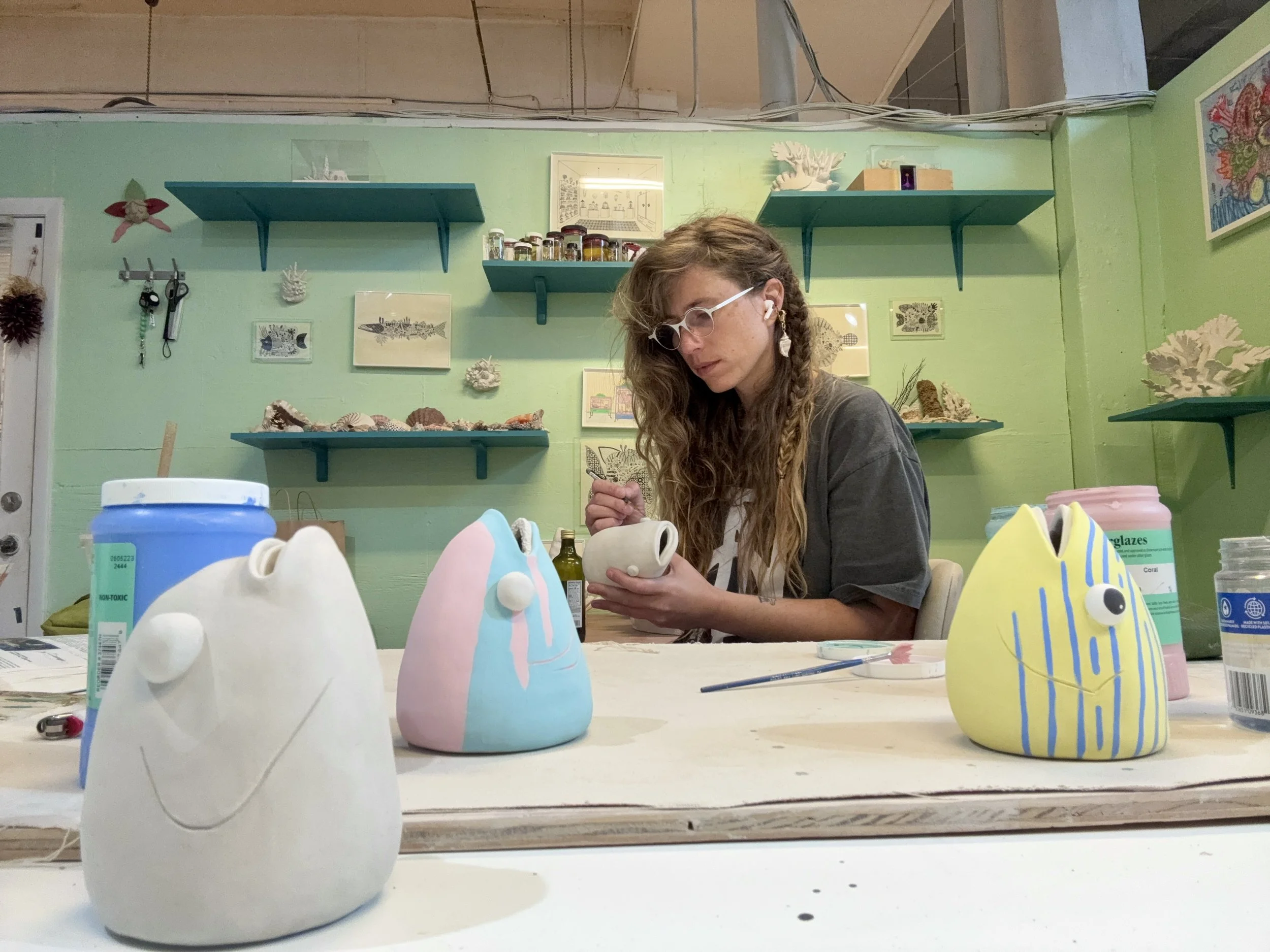
Can you tell us about your artistic practice and how you use art to talk about the ocean?
The ocean is a conceptual framework that shapes my practice.
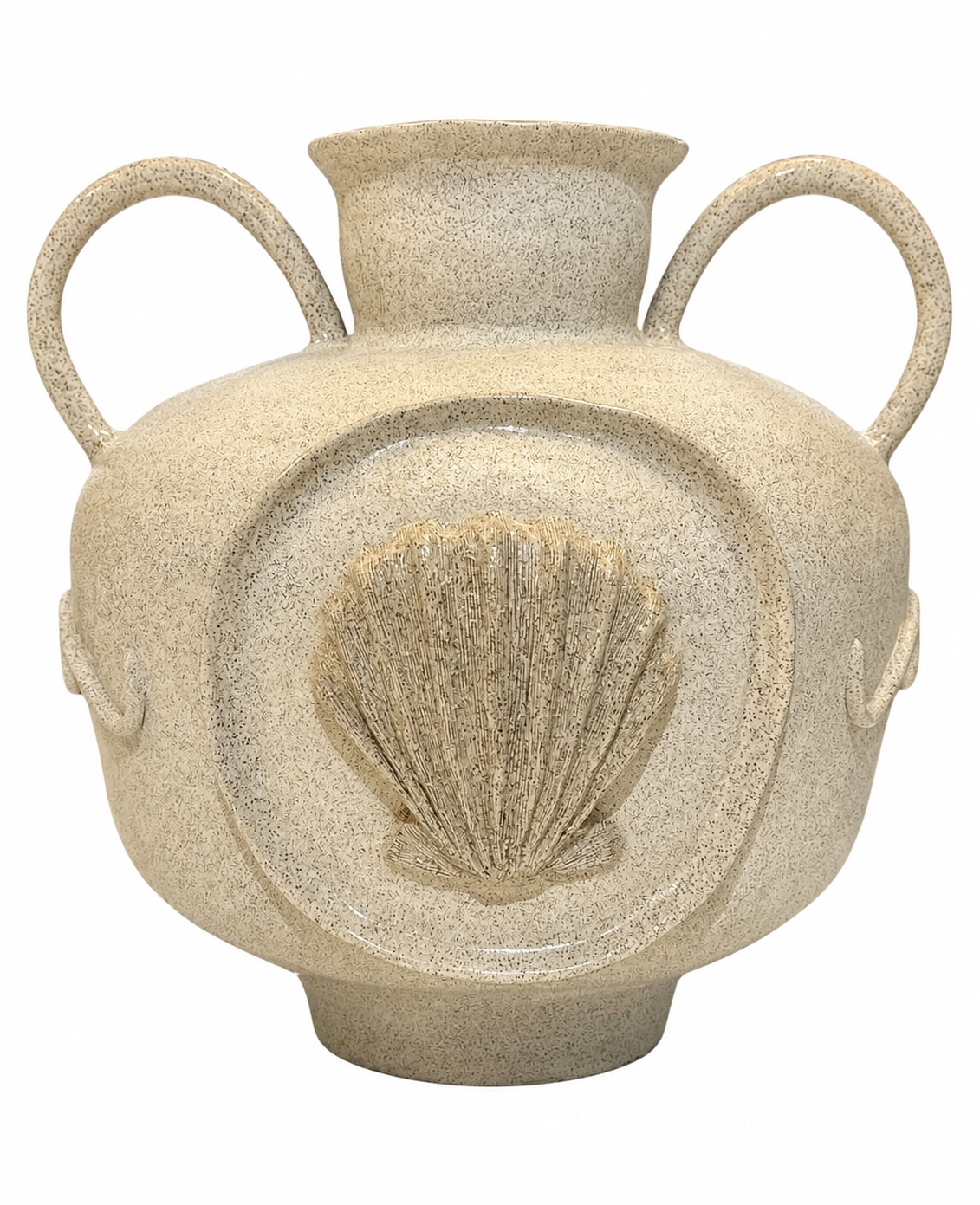
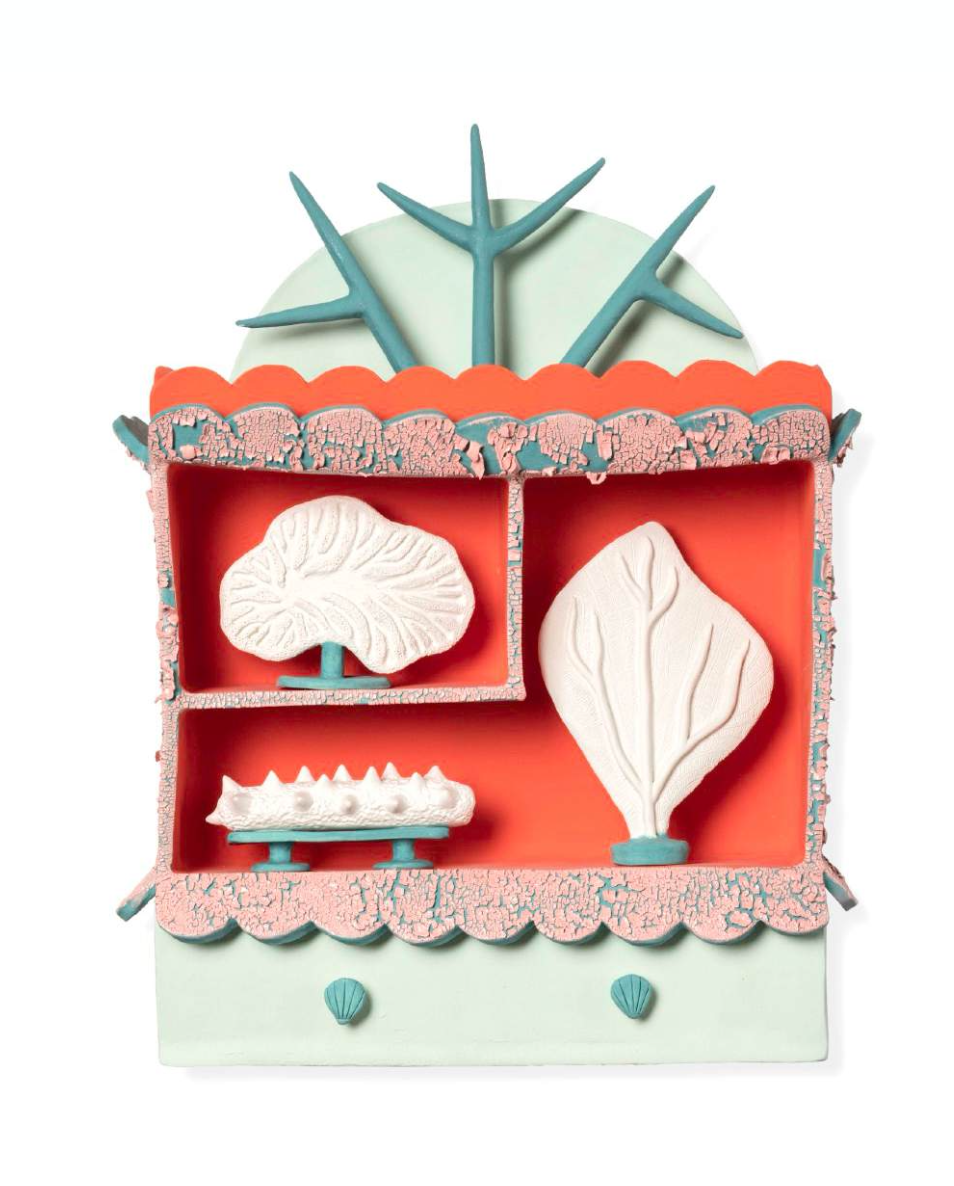
I draw from marine systems—their structures, behaviors, and modes of interdependence—to build sculptural and spatial environments. Ideas like growth, erosion, symbiosis, and fragility become formal decisions in the work: how forms accumulate, how they relate to one another, how a viewer moves through them.
Through ceramics, drawing, and installation, these ecological logics are translated into physical space, creating a way to think through the ocean as a lived experience.
What role does clay and ceramics play in your creative process? Are you working more from scientific research or your own feelings?
Clay allows me to work through processes that mirror marine systems—layering, accumulation, slow formation over time.
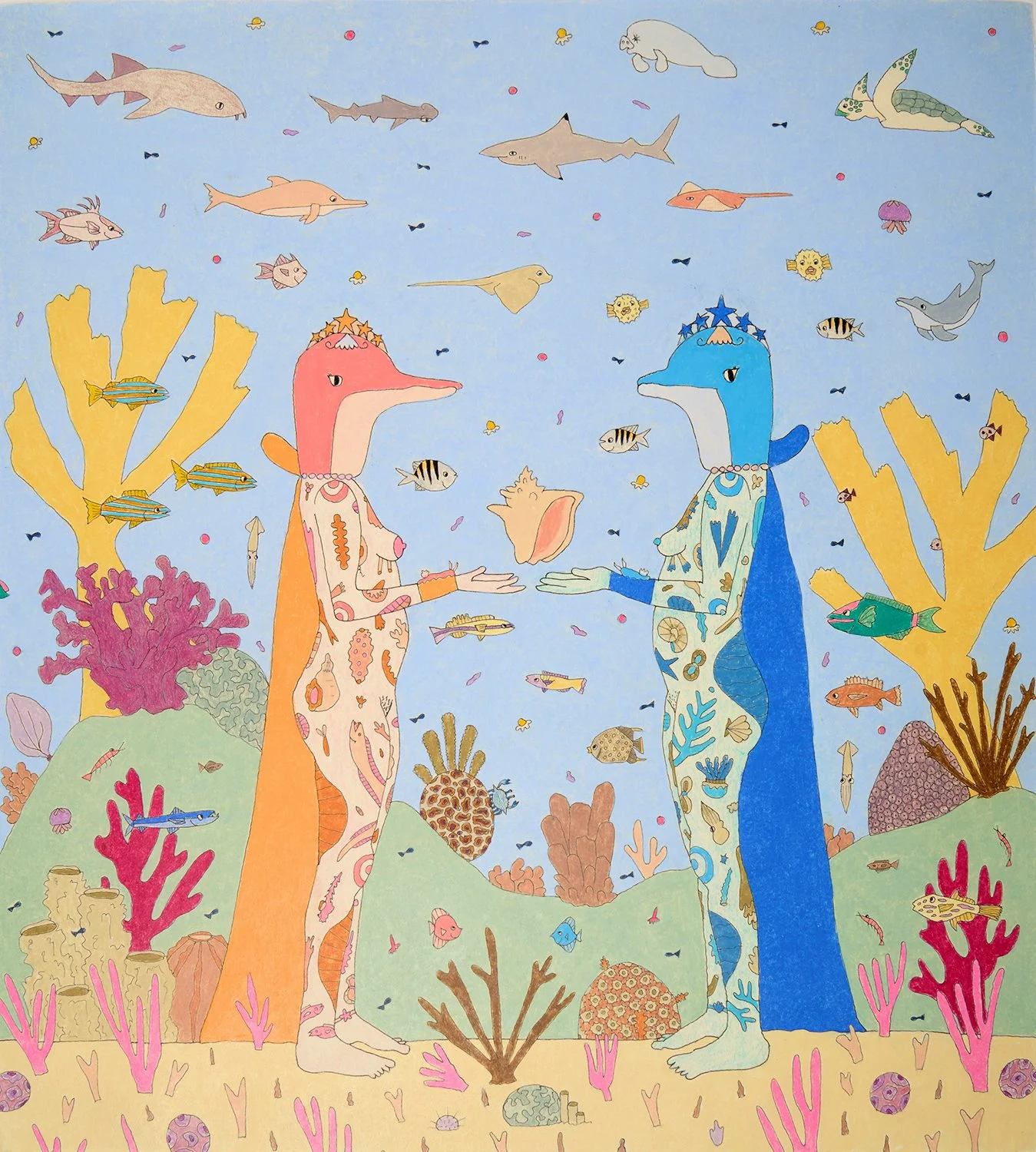
The work is grounded in long-term scientific research and direct experience in these ecosystems. That knowledge moves through observation, memory, and the body, building as both structure and sensation.
Tell us about a personal artistic project or body of work that you are currently excited about:
I’m excited about a new body of work that expands a drawing series into ceramics and then back into drawing again.
It brings the Curandeiras—twelve female archetypes—into ceramic wall sculptures developed alongside a series of ritual drawings. The two unfold together, each one informing scale, gesture, and presence in the other.
The Curandeiras form a mythology rooted in the ocean as origin—the first mother. Each figure is tied to a South Florida marine species and inhabits a specific environment—reef, seagrass, sponge flats, or open water—building a system of guardianship and knowledge across these interconnected ecosystems.
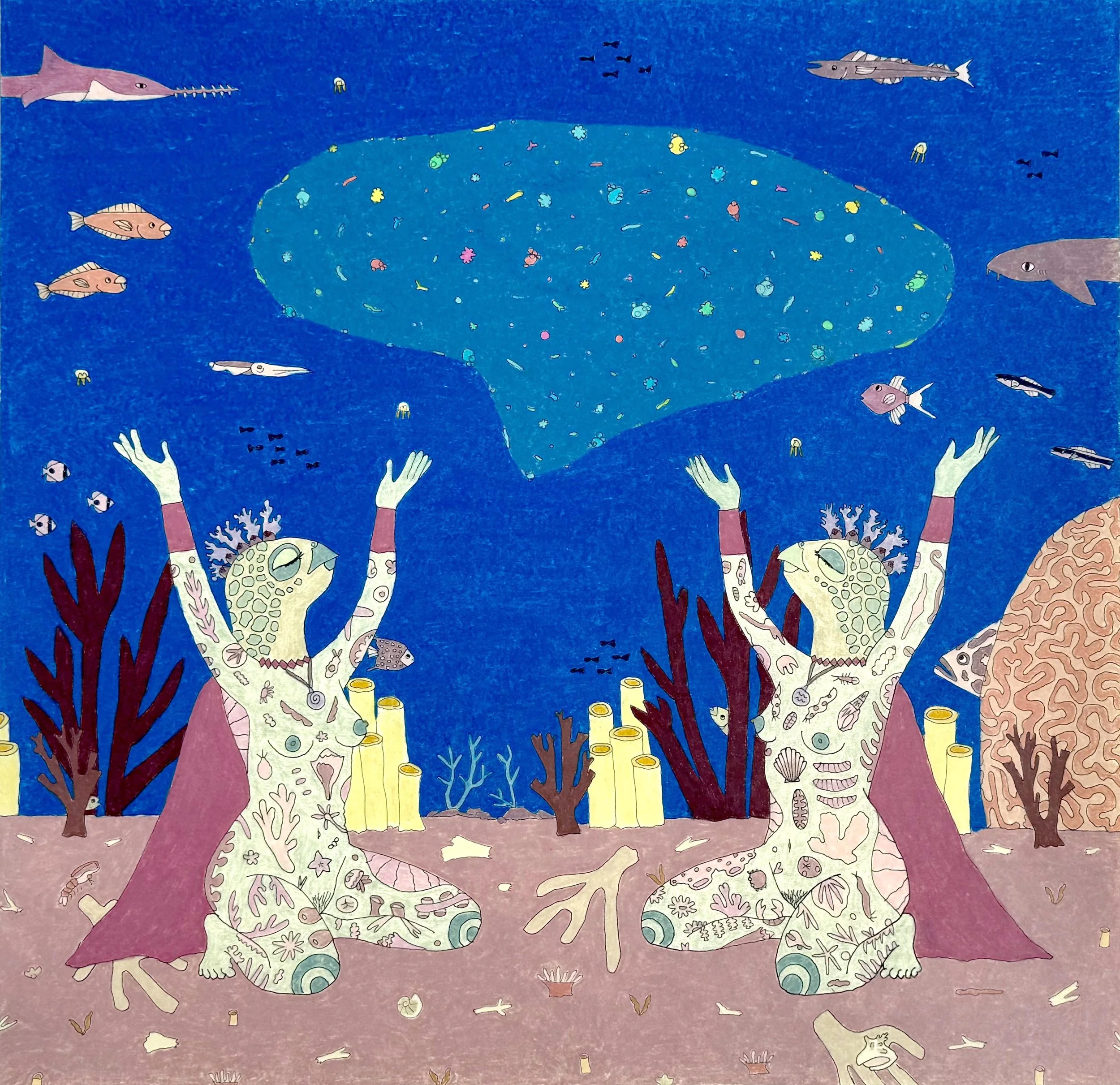
Moving between drawing and sculpture allows the figures to shift between apparition and material presence—held in image, then given weight and permanence in clay.
Tell us about how you have developed as an artist since you began working at Bakehouse:
My practice as a Miami-based artist was built inside Bakehouse.
I began in the communal ceramics studio, developing a foundation with the material, and over time expanded into a larger studio as the work grew in scale and ambition. That progression allowed me to move from object-based work into more complex installations and bodies of work that exist in dialogue with one another.
Bakehouse has provided the stability and continuity necessary to sustain that evolution.
How do you feel your art practice has developed or changed over the last several years? Does Bakehouse play a role in this?
The work first expanded into spatial, installation-based, and participatory forms—projects like Carcass, Steps We Take, and Waters We Share, where the viewer’s presence becomes part of the work.
From there, color emerged as a central language—through works like Heliotropic Seekers, To Have and To Hold, and Curandeiras.
At the same time, the work became more deeply rooted in South Florida’s ecology. Bakehouse made it possible to stay with each shift long enough for it to fully develop.
Your work deals with heavy themes like coral bleaching. How do you stay inspired and motivated in your work?
There was a point where focusing only on bleaching, die-off, and loss—while witnessing it firsthand—became difficult to carry forward.
The work shifted toward creating connection. It holds the reality of what is at stake, while centering what remains—what is still alive, still complex, still worthy of attention and care.
From your perspective, can you describe why art practices like the ones at Bakehouse are important to have in Miami?
Miami is a city where environmental change is immediate and visible.
Spaces like Bakehouse allow artists to engage with that reality over time—to research, experiment, and build work that responds directly to the conditions of this place. Without that kind of sustained support, it becomes much harder to develop work that is both deeply informed and publicly engaged.
How do you define success as an artist?
Success is being able to maintain and grow a practice in spite of the complexities of navigating a life as an artist.
It’s also when the work creates a shift—when it alters how someone sees or feels, even briefly.
You have been an established artist and educator for years, and a Studio Artist with Bakehouse for __ years. What advice would you impart on emerging artists now?
Protect your attention.
There’s pressure to move quickly, but the strongest work comes from sustained focus. Stay with what holds you, even when it takes time to understand it fully.
What do you hope to achieve in your career as an artist in the next five years?
I’m interested in expanding the scale of the work—allowing it to take on greater spatial presence and complexity.
At the same time, I want to deepen the mythological framework I’ve been building, developing narratives that can hold different bodies of water and evolve through new encounters with them.
Do you have any upcoming exhibitions?
Rituals of Becoming opens May 14, 2026 at Coral Gallery in Miami.
Heliotropic Seekers: Drift will open May 22 as part of the Oolite Arts Walgreens Windows.
You describe your work as "speculative mythology." Are you trying to document the ocean as it is now, or are you trying to imagine what it might look like in the future?
Speculative mythology emerged as a way to move beyond documentation. For years, I was working very directly with ecological loss while also witnessing it in the reef.
I began looking at how ancient civilizations built systems of belief around nature—how they created rituals that positioned humans within, rather than separate from, the natural world.
From there, I started constructing new narratives. They are imagined, but grounded in long-term research and lived experience. The work proposes a different relationship—one based on integration, memory, and regeneration.
How does living and working in Miami specifically influence the themes you explore in your art?
Living in Miami changed everything. It gave me the reef as my backyard.
Before that, in São Paulo, my connection to the ocean was mostly mediated—through research, images, and occasional travel. Here, that relationship became direct, continuous, and immediate.
That proximity deepened the language I had been building for years and allowed it to grow exponentially. The work is now inseparable from that access.
Artist Statement:
My work explores the intersection of marine ecosystems, +logy, and material transformation, reimagining our relationship with the ocean. Drawing from scientific research and South Florida’s coastal landscapes, I create ceramic sculptures, drawings, and installations that merge natural history with fiction. Through coral-encrusted vessels, mythical figures, and immersive environments, I examine cycles of growth and decay, resilience and loss.
As an environmental artist and educator, I translate ecological narratives into tangible forms that invite engagement and reflection. Ceramics, with its ability to mimic the textures and structures of coral, allows me to highlight both the beauty and vulnerability of underwater ecosystems. My site-specific projects expand this dialogue, immersing audiences in spaces that evoke both urgency and wonder.
At the heart of my practice is storytelling—bridging scientific knowledge with cultural memory and speculative mythologies. By crafting artifacts of an imagined future, I invite people to step beyond the role of observer, dissolving boundaries between art, science, and environmental advocacy. These works reframe marine life as both fragile and powerful, revealing the ocean as a sacred space of knowledge, memory, and transformation.
Artist Biography:
Beatriz Chachamovits is an environmental artist and educator from São Paulo, Brazil, living and working in Miami, Florida. Her work explores the beauty and fragility of marine ecosystems through ceramic sculptures, drawings, and installations that merge natural history with speculative mythologies. By highlighting the intricate forms of underwater life, she invites deeper reflection on our impact and responsibility toward ocean conservation. She is the author and illustrator of the book The little handbook of marine fishes and other aquatic marvels (Pequeno manual de peixe marinhos e outras maravilhas aquáticas), published by Companhia das Letrinhas in São Paulo, Brazil in 2018.
Selected solo exhibitions include “Into the Great Dying: Waters We Share” at Faena Art Project Room in Miami, Florida (2022), and “Into the Great Dying: Roles We Play” at the Museum of Contemporary Art of North Miami, Florida (2023) and “ Meet me in the clearing between the waves” an early career survey at Miami Design District in Miami, Florida (2024). Selected group exhibitions include the National Museum of Rio de Janeiro, Brazil, “Coral Expedition: 1865 - 2018” (2018), the Art and Cultural Center of Hollywood, Florida, “C[h]oral Stories and Collective Actions” (2022), and The Baker Museum, Naples “Entangled in the mangroves” (2025).
Chachamovits has received fellowships to attend residencies at Watershed Center for Ceramic Arts and Penland School of Craft. She is the recipient of Oolite Arts’ The Ellies Awards (2023) and was commissioned by the City of Miami Beach for the Elevate Española public art project (2023). Her work has been featured in Vogue Magazine’s “Earth and Us” section, Arte Al Día, and the National Geographic Education platform as part of an AAAS grant to teach fifth graders about women in marine science. She is currently a resident artist at The Bakehouse Art Complex in Wynwood, Miami.