
Meet Matthew Dutton:Material Memory and Meaning in the Making
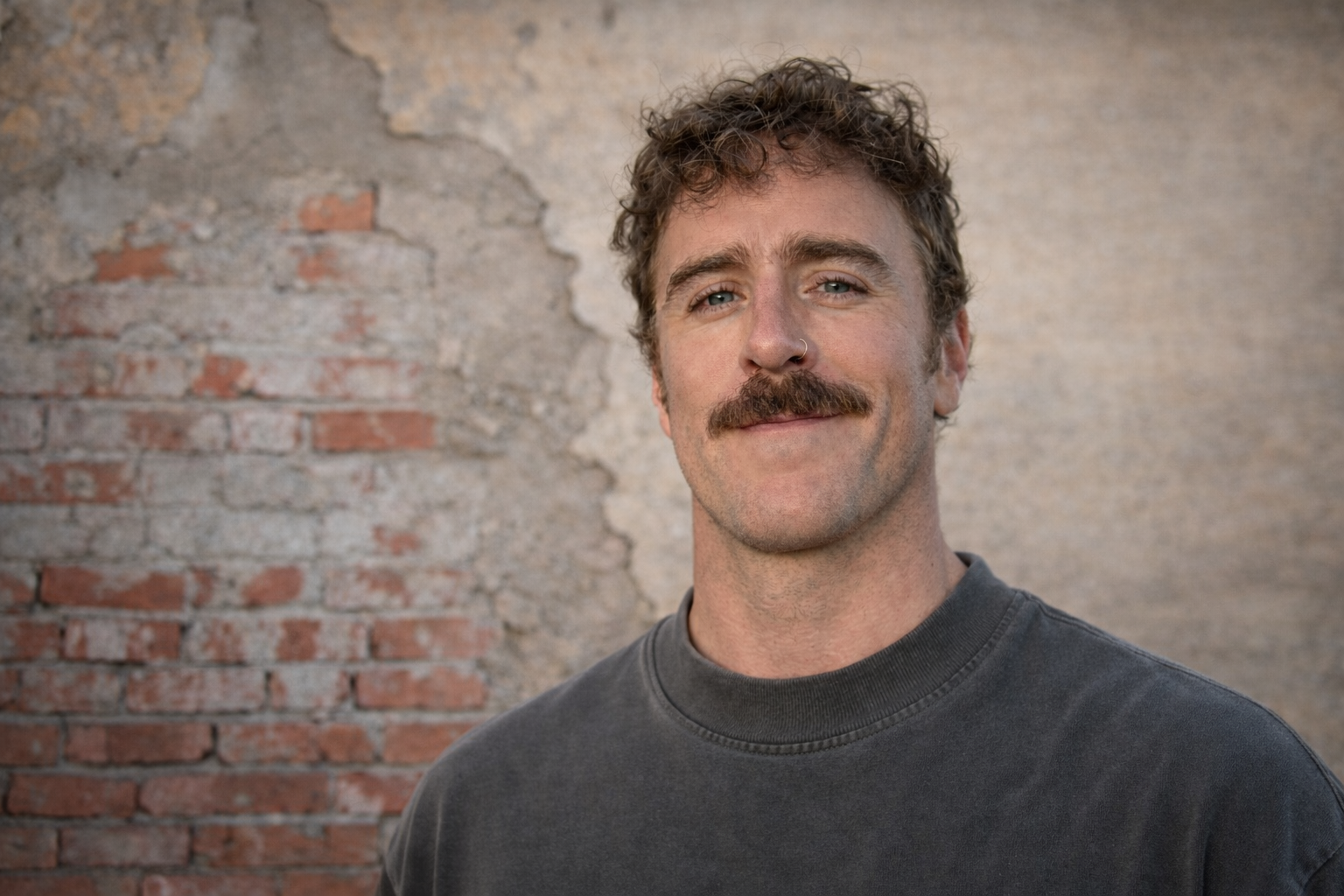
Bakehouse was delighted to welcome as a visiting artist/architect Matthew Dutton, a University of Miami School of Architecture graduate architecture student. Matthew is part of a new generation of designers expanding the boundaries of the discipline, working fluidly between material research, installation, and the built environment. His practice centers on a compelling question: what if the materials we build with are not passive, but active carriers of history?
This inquiry is at the core of his thesis project, Brick Has Memory. In it, Dutton reconsiders the humble brick as more than a unit of construction. Instead, he frames it as a witness, one that records the labor that formed it, the systems that produced it, and the social and political contexts in which it has been used, dismantled, and even repurposed in moments of protest and change.
Through a series of installations, Dutton treats the brick as an archive. Each work functions as a kind of “memory box,” bringing together layered histories of extraction, industrialization, and resistance. Rather than presenting a singular narrative, the project invites viewers to engage multiple timelines at once, shifting perception and encouraging a deeper awareness of the built environment.
His time at Bakehouse Art Complex has been integral to the evolution of his work. Immersed in a dynamic community of artists, Dutton has been able to expand his practice beyond the academic setting, testing ideas through making while engaging in dialogue with peers across disciplines. The experience not only has supported the physical development of his thesis, but it also has sharpened his understanding of how architecture can operate as both cultural expression and lived experience.
Before pursuing architecture, Dutton worked in the entertainment industry, including roles at Sony Pictures Entertainment and 20th Century Fox. That background continues to inform his approach, particularly his sensitivity to narrative, audience, and the creation of immersive experiences. His installations are not just objects, but encounters designed to draw viewers in and leave them with new questions.
As he completes his degree, Dutton is already looking ahead to a practice that bridges sculpture and architecture, research and fabrication. His work suggests a future in which materials are not merely assembled but understood, where the act of building becomes a way of reading, holding, and reshaping memory itself.
Bakehouse congratulates Matthew on the completion of his thesis and we wish him well as he moves forward.
Matthew Dutton Bio and Q&A for Bakehouse:
I am a graduate architecture student working between material research, installation, and built form. Currently completing my M.Arch at the University of Miami, my work investigates how materials operate not just as building components, but as active cultural agents—absorbing, carrying, and reshaping histories over time.
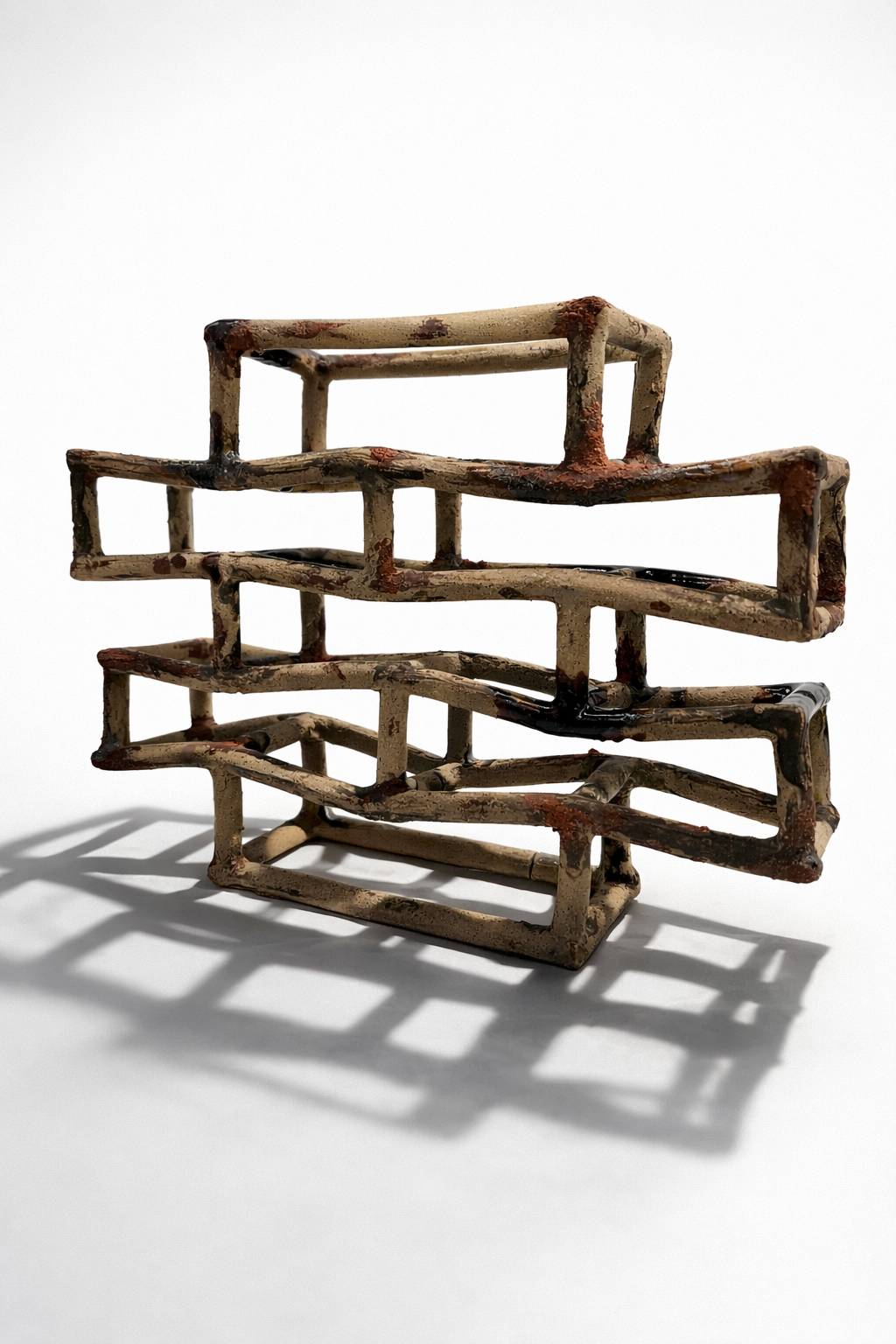
Can you tell us about your thesis, Brick Has Memory?
Brick Has Memory began as a question—what if the materials we build with are not passive, but active participants in history? The brick, because of its ubiquity and durability, becomes a kind of witness. It records the hand that made it, the systems that produced it, the structures it formed, and the moments when it left the wall entirely—entering demolition, displacement, or even protest.
The exhibition treats the brick as an archive. Each installation becomes a “memory box,” where fragments of history—labor, extraction, industrialization, resistance—are held together in a single field. Rather than telling a linear story, the work allows these histories to coexist and be read simultaneously.
What do you want people to feel when they encounter your work?
I want people to pause—and to reconsider something they thought they understood. The goal isn’t to provide answers, but to shift perception. If someone walks away seeing a brick differently—recognizing it as something that carries history rather than just a unit of construction—then the work has done its job.
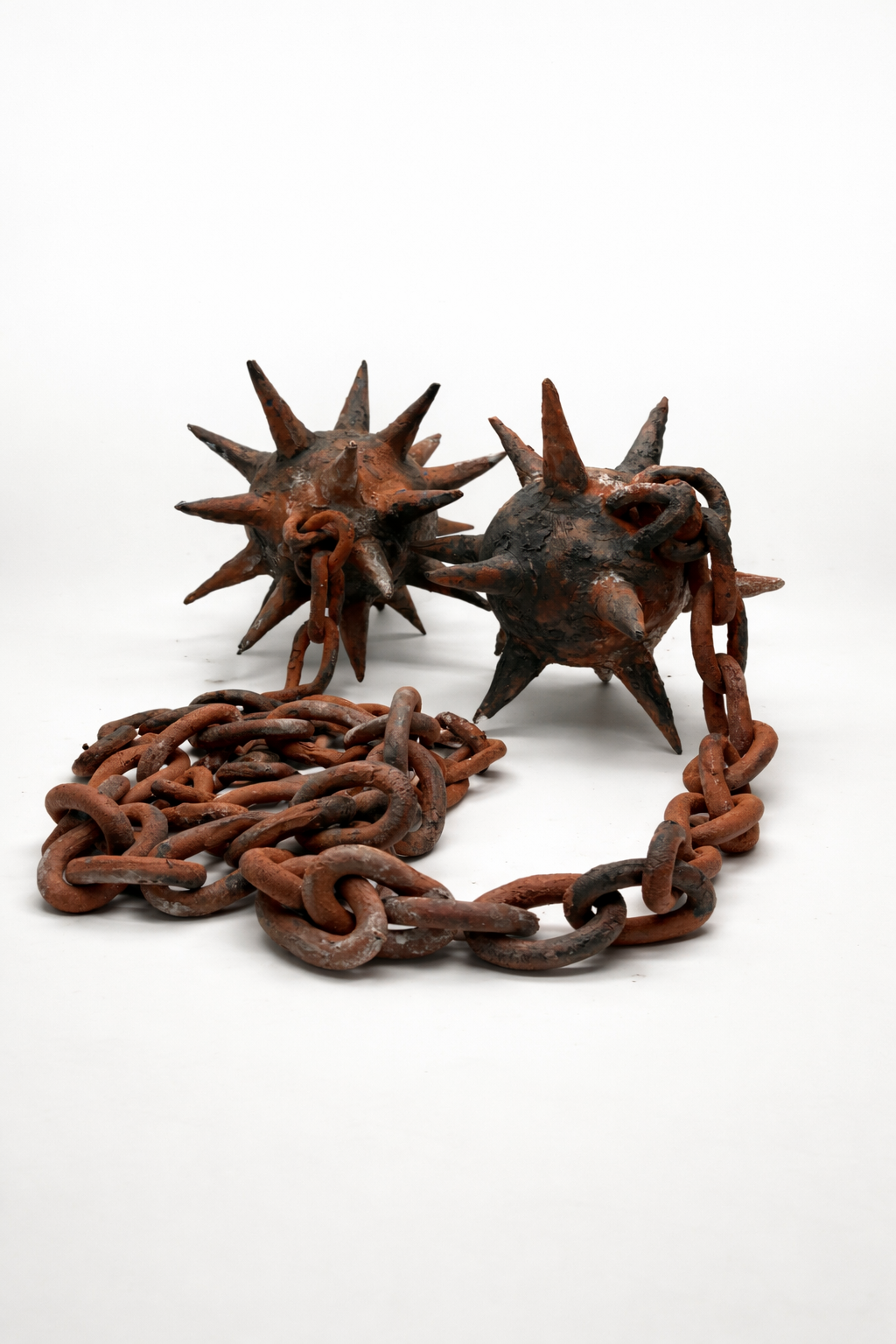
Your work often deals with labor, extraction, and displacement. Where does that interest come from?
I think it comes from looking closely at things we’re taught not to question. I come from a long line of union workers—elevator tradesmen and ironworkers. As immigrants, my family took the jobs that were available—the ones that could provide stability, a foothold, a version of the American dream.
In doing so, they gave their bodies to the built environment. They became part of the machine, building the city I grew up in, without their names ever being attached to it. I grew up pointing—“my grandpa built that.” And maybe that’s the legacy. But I also know the cost. My grandfather lost his foot working as an ironworker, before workers’ compensation, before protection. He lost his job, but never the pride. That stayed.
Materials can feel neutral. Brick, maybe even more than steel. But they’re not. They carry fingerprints, pressure, heat—evidence of the hands and systems that made them.
Once you start tracing those histories, you realize that materials are not just products—they’re evidence. They carry the marks of labor, the economies that scaled them, and the consequences of those systems over time. My work is about making those histories visible again—bringing attention back to the hands, lives, and forces that shaped the built world, but are so often left out of its narrative.
How has your time at Bakehouse Art Complex shaped this work?
Working from Bakehouse over the past few months has been an incredibly meaningful extension of this project. The community and the work being produced around me have been deeply inspiring, but more importantly, it’s shifted how I understand my own practice.
Before architecture school, you worked in the entertainment industry. How does that experience influence your practice?
Working at places like Sony Pictures Entertainment and 20th Century Fox shaped how I think about storytelling and audience.
In entertainment, you’re constantly thinking about narrative, how to guide attention, how to engage audiences and how to create an experience that resonates. I approach my work in a similar way. Even though the medium is different, the goal is still to engage someone—to pull them in, to make them feel something, and to leave them with a question.
What are your plans after graduation?
After graduating, I plan to spend some time in New York, continuing to develop this work across design, fabrication, and research contexts. I see my practice operating between sculpture and the built environment, so I’m interested in continuing to work at multiple scales—building, installing, and researching, ideally through a series of fellowships.
This summer, I’ll also be exhibiting a landscape installation at Sylvester Manor on Shelter Island—so if you find yourself out on the East End of Long Island, you might catch it in person.