
Artist Highlight: Lee Pivnik
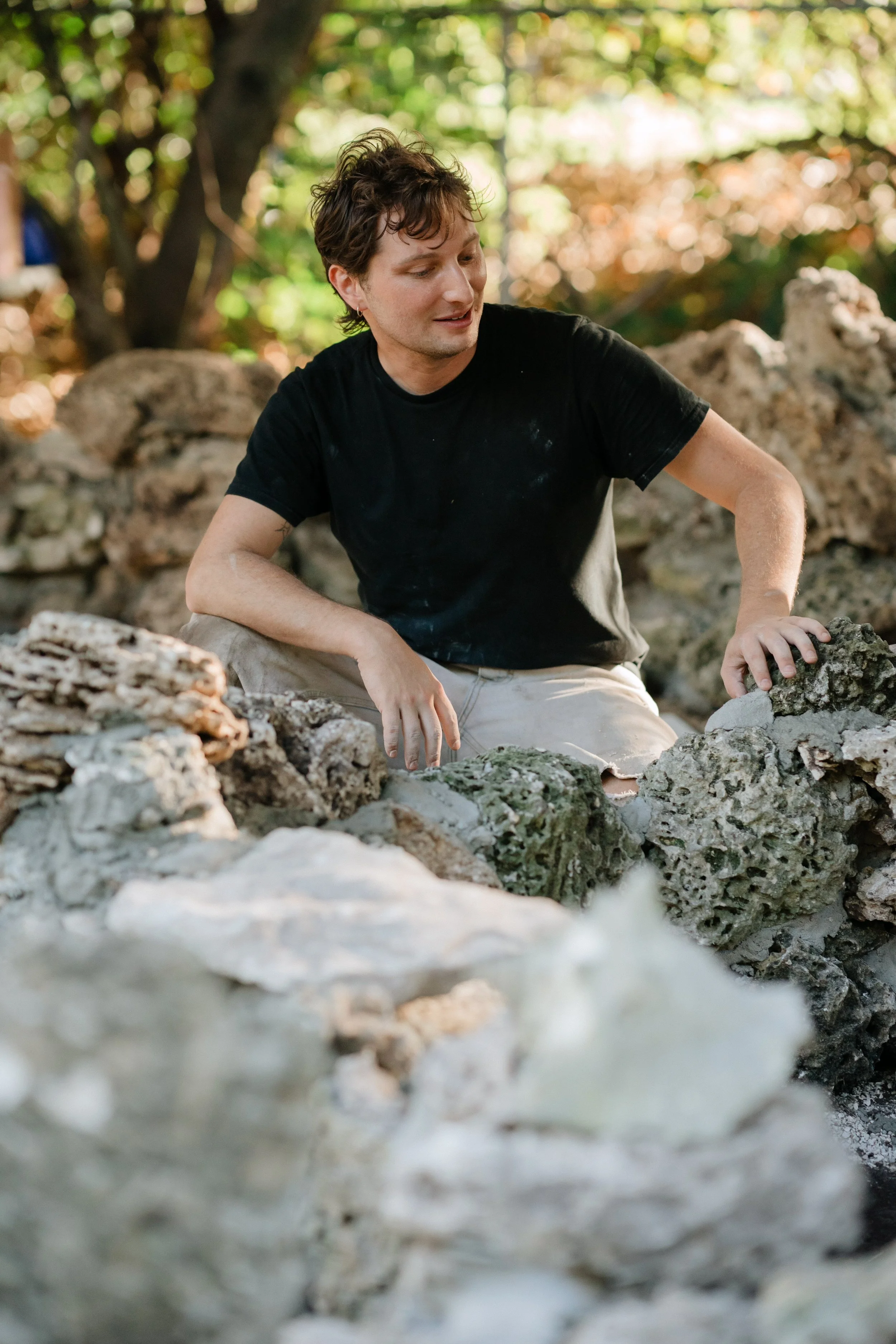
Lee Pivnik is a Miami-based artist, sculptor, and founder of the Institute of Queer Ecology (IQECO). Working across sculpture, installation, and social practice, his work explores ecological entanglement, mutualism, and environmental change through the lens of South Florida’s shifting landscapes. Drawing inspiration from living systems, Pivnik imagines speculative futures that challenge extractive models and propose new forms of coexistence between human and more-than-human communities.
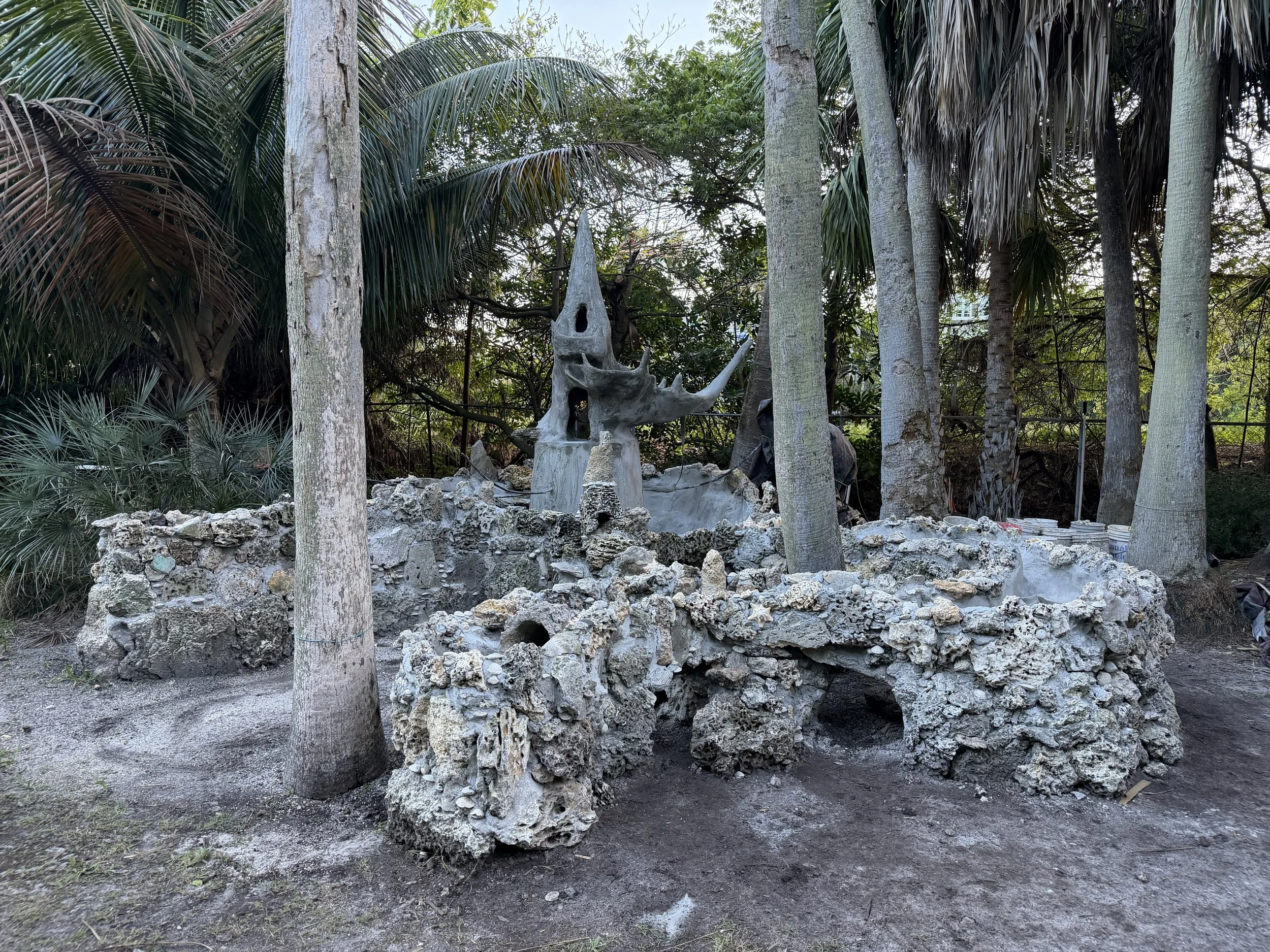
Recent projects include TIDEPOOL, a 25-foot sculptural fountain developed during his residency at The Kampong that functions as both public artwork and ecological infrastructure, filtering and oxygenating Biscayne Bay through living systems. Across his practice, Pivnik investigates how art can foster environmental care, collaboration, and collective imagination.
Learn more about Lee Pivnik’s evolving practice, the development of TIDEPOOL, his work with the Institute of Queer Ecology, and his recent exhibition I Wish We Had More Time at Kunst Haus Wien.
Can you tell us about your artistic practice?
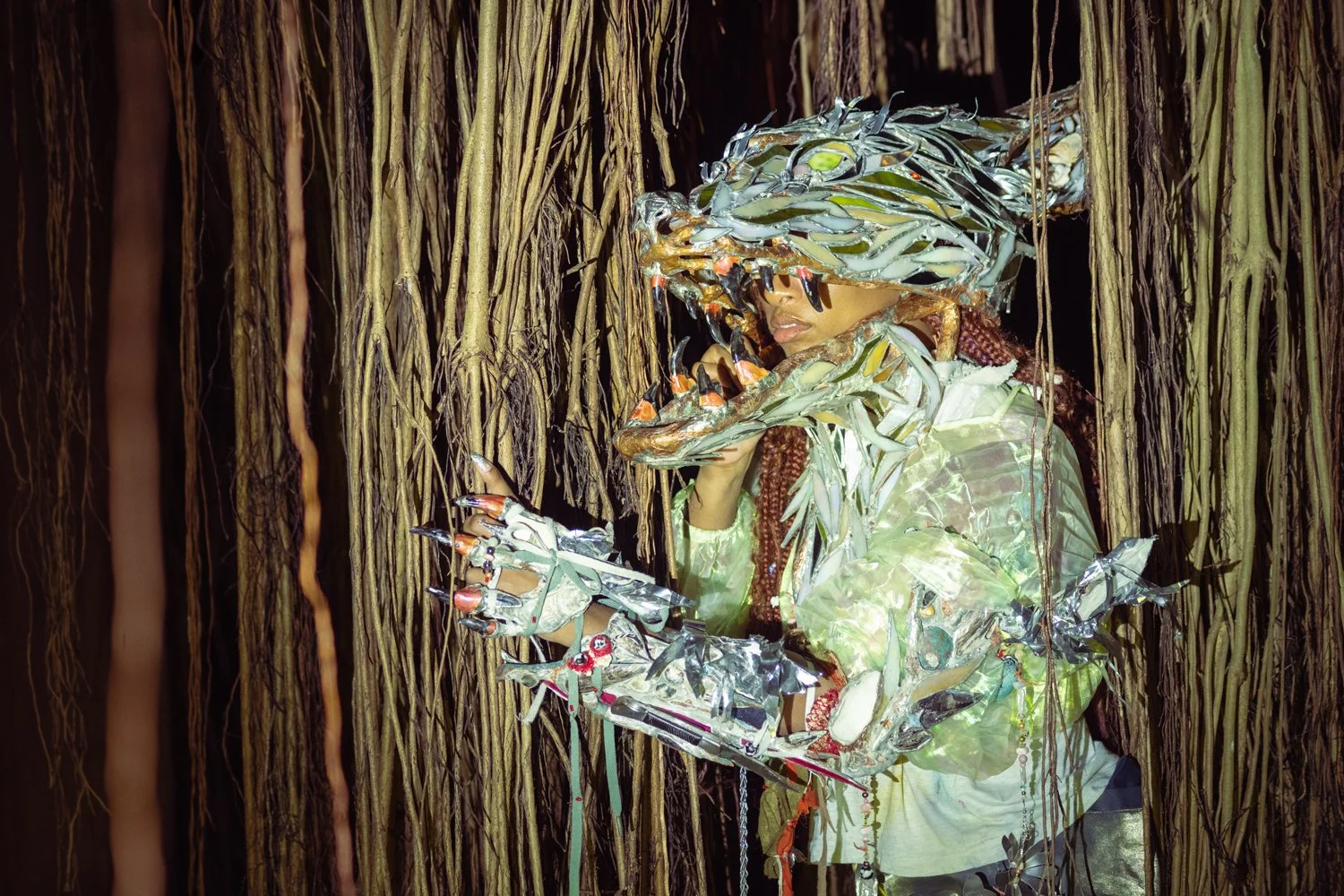
My practice is rooted in environmental storytelling and Florida’s changing ecology. I consider myself a sculptor and a scavenger, because as I’m putting together an artwork, I’m really interested in the histories and connotations that materials can carry. Whatever the process though, be it ceramic sculpture, soldered-together shellcraft, video installation, etc, the goal is to encourage people to imagine how the decisions we make today regarding our environment can yield a biodiverse future, or a world with less and less life.
Your work is described as a "collaborative organism" that takes inspiration from living systems to imagine a future based on mutualistic relationships instead of extractive economies. It is stated that your artist practice is almost dependent, or symbiotically beneficial through also acting as a social practice to both other artists and to ecology. In your experiences, have you realized anything specific or discovered something distinct through this artistic engagement?
There’s a great quote from Mariame Kaba that “Everything worthwhile is done with other people.” I think that everyone's art practices are dependent on other people, everything we do in life is. I think it’s better to celebrate those collaborations instead of masking them. Artists are sold on this myth that they will find their success through rigid individualism, through all these ways we tell art history through singular heroic figures. While that model works for maybe like .00005% of blue chip market stars, the majority of us are left with so few resources or power that it’s clear to me that collectivized, collaborative strategies are a better approach.
Can you tell us about your current artist residency at the Kampong Garden. Please tell us about your recently debuted work creating a fountain, titled TIDEPOOL within the garden. This is also a milestone as your first public installation. Can you tell us how this piece interacts with the specific history of the site as a hub for botanical research?
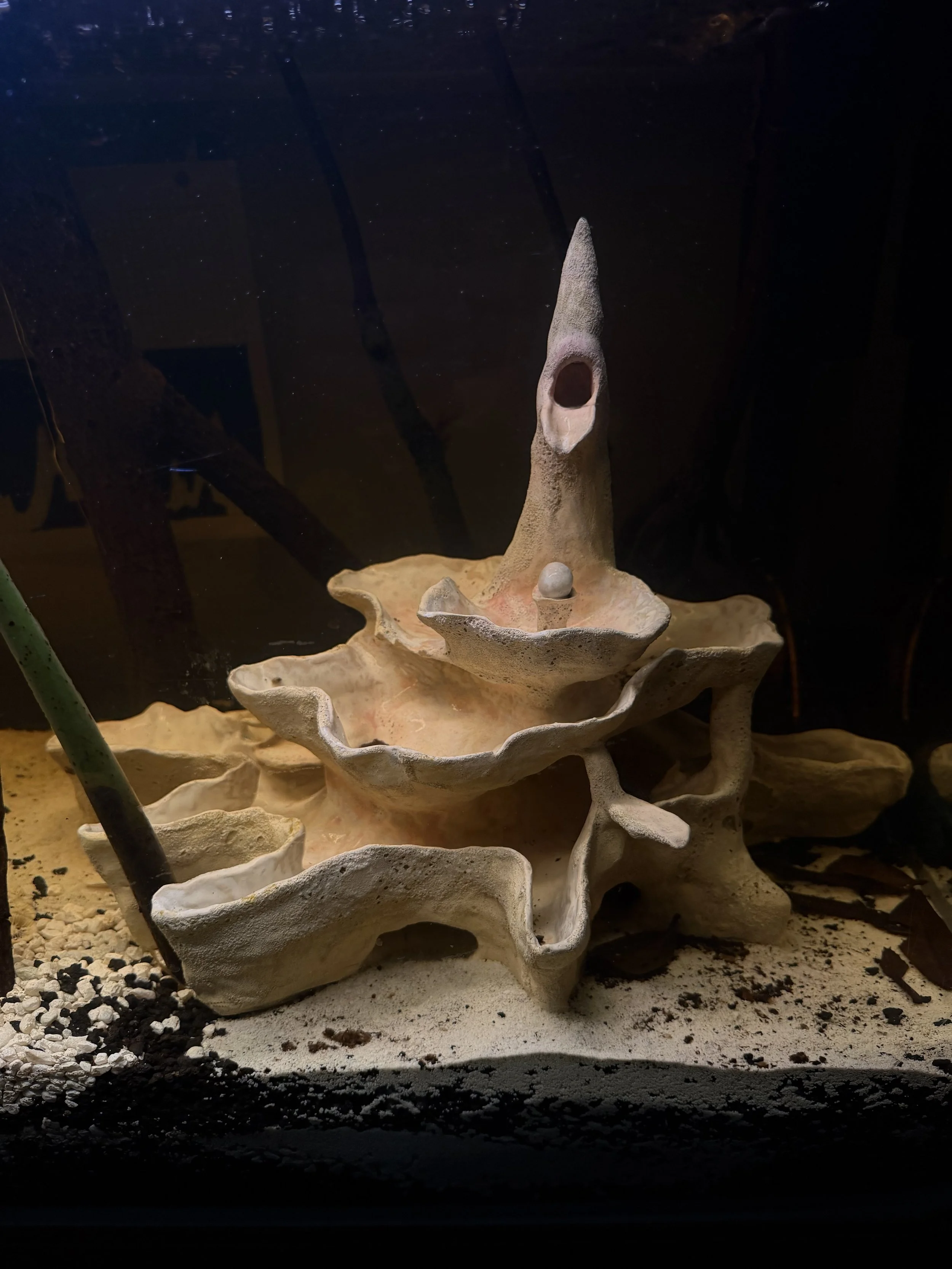
The Kampong is the historic home of Dr. David Fairchild, a famous botanist who really, for better and worse, introduced countless plant species to south Florida that helped affirm the “tropicality” of this place. So much of this landscape was pine forests, and the cultural associations we have with Miami today are inextricably tied to the histories of environmental change that produced a kind of tropical dreamland by importing species from across the globe. Fairchild was doing extensive research at the Kampong to determine what could grow in this planting zone. I’m trying to continue that tradition, of the site as a living laboratory, with my public artwork “Tidepool”, a 25-foot sculptural fountain that is designed to filter and oxygenate Biscayne Bay. It’s only been possible through the kind of collaborative ethos we just talked about - where I’m working with friends that are marine biologists, stonemasons, and nature-loving volunteers to assemble the sculpture, stone by stone, which now weighs over 20 tons. The sculpture is essentially two fountains, concurrently contained in a spiraling shape that is like a large abstracted conch shell. The lower fountain, once complete, will pull in water from biscayne bay, and pump it through a living system of sea sponges, oysters, and other natural filter feeders that help remove ecoli and other contaminants from this area of the bay. The upper fountain, in contrast, is a freshwater system, designed for growing plants hydroponically (or vermilionically, assisted by worm-produced fertilizer).
Any advice you would impart on an artist considering to produce a public installation?
Oh my god, simplify it. I started with an ambitious idea and it’s only spiraled into a larger and more complex form. I think it’s important to let your ideas change as you make them, I had a professor tell me once “If you already know what it’s going to look like, what's the fun in making it?” So starting with a simpler idea is probably best, so you can still enjoy the process and have enough space for experimentation as it develops.
Tell us about your collaborations with Symbiotic House:
Symbiotic House is kind of a vessel to hold various kinds of architectural and Florida-specific research I’ve been absorbing. I am slowly slowly slowly laying the groundwork for a project that unites a lot of my different ways of working, something that feels permanent and architectural and social but as a site of ecological regeneration, of climate care and environmental repair. Tidepool really developed out of this, as a proof of concept for complex living system sculptures, but what I’m trying to do with Symbiotic House is expand that work into something inhabitable.
Since founding the Institute of Queer Ecology (IQECO) in 2017, how do you feel your role has evolved? Do you think the institute has improved or contributed your own work as an artist?
Lee: Learning about queer ecology for almost a decade now and deepened how I speak about nature, and how I think about collaboration (both human and more-than-human). At the beginning, the project was kind of a way of code-switching, freeing me to fold queerness into my practice as a methodology and a subject, while I was like “out” but not interested in queerness being integral to my identity. In the decade since, I’ve really come to embrace not just that part of myself, but its utility across my ways of working. Queerness itself is worldmaking - it produces and illuminates richly diverse worlds that are harder to see, at times intentionally. In my personal work now, I’m developing a longform multimedia sci-fi project titled “Chimeras”, that integrates a lot of those lessons of mutability and mutualism that I’ve gained from working with IQECO, back into my own voice and locality.
Tell us about how you have developed as an artist since you began working at Bakehouse:
The Bakehouse has let me scale up the work I’ve been doing. As an associate artist, I’ve been able to produce larger scaled ceramic projects that I’m looking forward to continuing. I’ve got a series of photographs from my residency last fall with AIRIE that I’m eager to print. The Bakehouse provides me access to facilities so that I can continue to refine, experiment and produce new work.
You are participating in the Klima Biennale at Kunst Haus Wien from April 10th to August 9th. Tell us about the intention you and your co-collaborator, Nic Baird came about inviting 40 queer artists from all around the world to then curate the space? How does the "hyper-local" ecological precarity of Miami translate to a global stage like Vienna? Can you tell us about the themes of the exhibition, I WISH WE HAD MORE TIME?
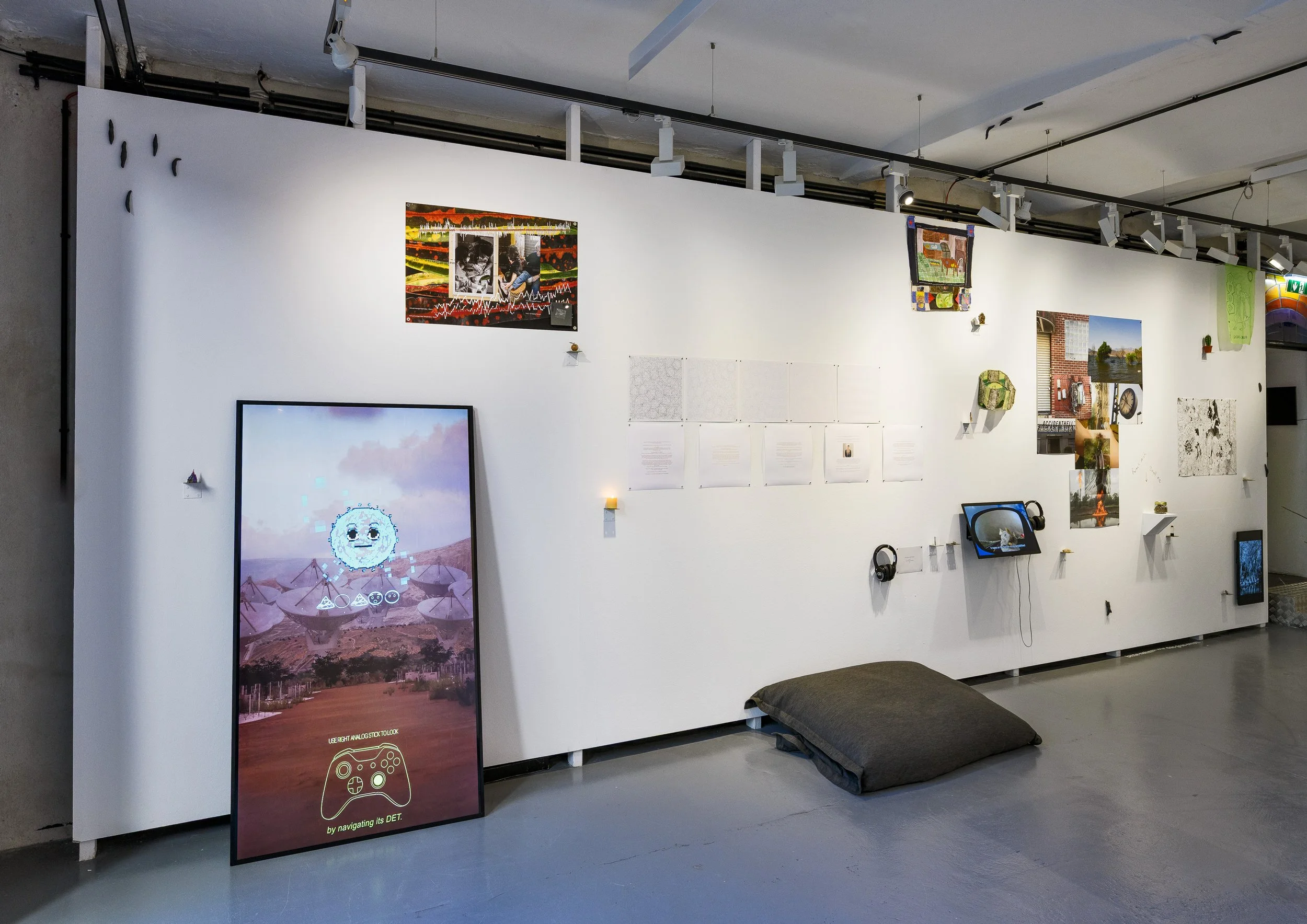
For I Wish We Had More Time, Nic and I were interested in what queer ecology could offer today in terms of processing climate change. We’ve made projects for the Institute of Queer Ecology in the past, like our film Metamorphosis, that looked at the planetary economic conditions that drive emissions and proposed other strategies for living together with each other and the planet. For this exhibition [I WISH WE HAD MORE TIME], we were not leading with climate solutions, but rather, creating a space first and foremost to come together and share our grief. Climate grief manifests in many forms, but we were particularly interested in what queer artists had to say about the kinds of loss that have burrowed into our hearts. We wanted to consider how the loss of species when their mutualisms become unsynchronized through climate change feels as personal as the loss of a loved one, and as widespread as the loss of a generation from AIDS. The show prioritized low cost, urgent ways of presenting ideas, thinking about the factor of time itself in climate change, and how we’re always desiring more of it.
Did presenting your work at an international scale—both through this biennial and the IQECO—change the way you view the "uniquely Floridian" challenges of climate care and urbanization?
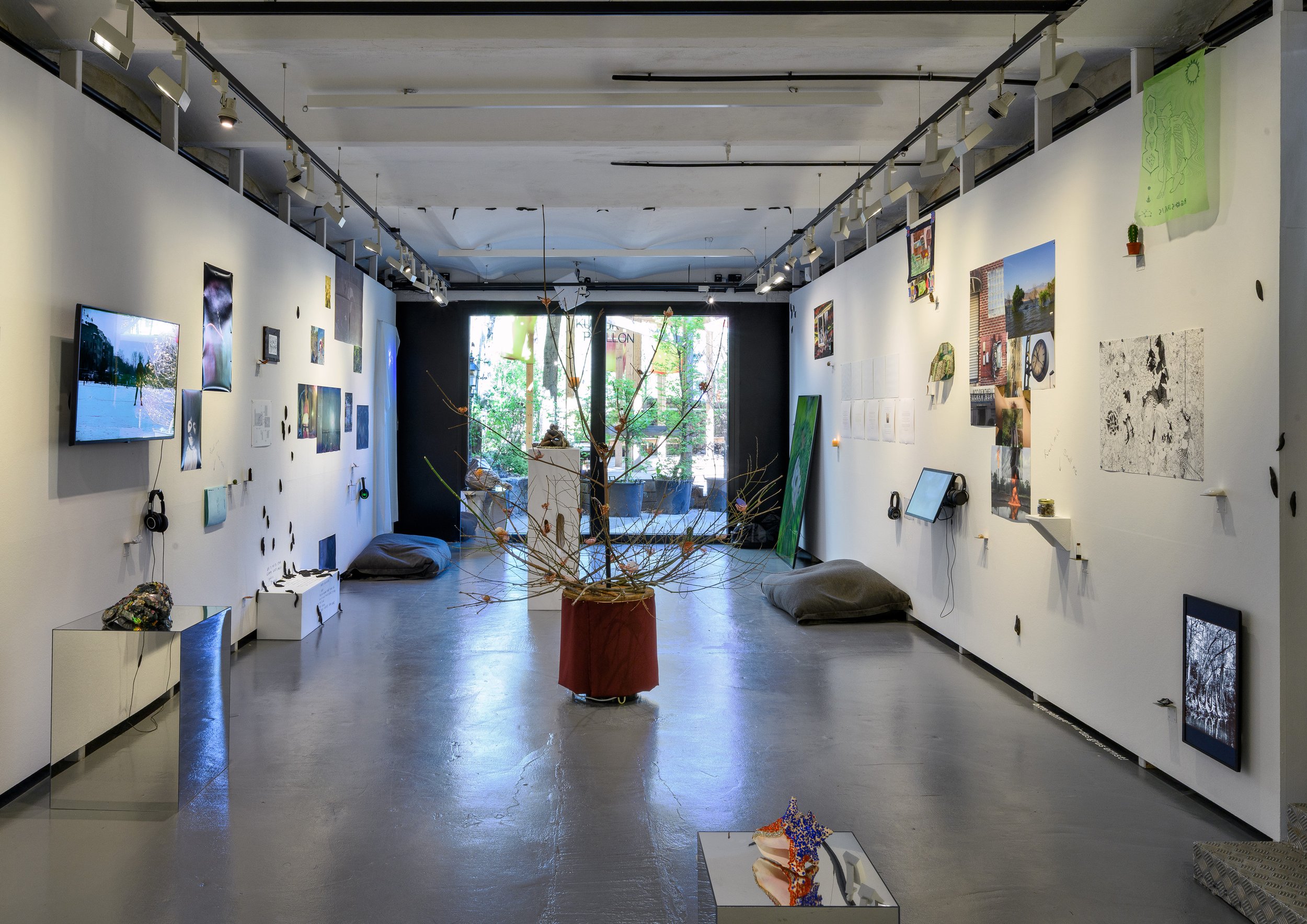
Travelling for exhibitions always reminds me that Florida’s problems aren’t necessarily unique. We can find case studies all over the world for how other places are adapting to similar pressures. After the biennial, the Institute of Queer Ecology had an exhibition in Seoul, and I had more time in South Korea to learn about their approaches to environmental issues. I got to walk along a restored creek in the middle of the city that had been totally covered by a cement highway two decades ago. I got to visit Jeju Island, where the island’s aquatic foraging culture shapes an entire ethic of engagement with the sea. I think sometimes, working in other environments can make me a bit jealous - some of the solutions that work in other places feel impossible in Florida. It’s hard to think about the future in Florida - the state where the rest of the country moves when it’s ready to die. Yet, I think we won’t be able to just “import” solutions from other places, when we talk about shaping Florida’s environmental future we need to push for and determine what that looks like ourselves so we can be motivated towards implementation.
From your perspective, can you describe why art practices like the ones at Bakehouse—which act as a "refuge" for creative infrastructure—are important to have in a city like Miami?
In ecology there's a concept called refugia — pockets of habitat that are stable enough that species can survive there and eventually repopulate the landscape. In a city whose primary economic engine is real estate speculation, artists are constantly being displaced by the very cultural value we generate, so spaces like Bakehouse begin to function as refugia: stable ground in a volatile system. Artists are always working on a new project, or for a new client, or in a new studio that they got a few months ago because someone gave them a deal, or maybe they got a residency and they are going to a new place, but won’t visit it again after the program ends. Even within this industry, nothing is stable. I take refuge in spaces like the Bakehouse, and in my community of peers that work here.
How do you define the role of the artist in society?
I think artists are all so different and are trying to do different things in society that it’s not useful to generalize. I think the lines are blurring too, between artists and designers, musicians and performers, so that it’s an exciting time to try to even get a handle on what artist production could look like, liberated from rigid categories, and what it will continue to become. Yet I think society more and more is trying to simplify the role of the artist into someone who produces relatively stable goods that appreciate in value. I think the role of the artist should and could be so much more ambitious than that.
How do you define success as an artist? Is it found in the exhibits and galleries, or is it in the safe routes you leave behind for other queer artists?
On the last day we were in Vienna for our exhibition at Kunst Haus Wien, a mother came in with her kid who looked like they were in high school or maybe an undergrad. The two of them spend almost two hours in the space, slowly moving through it, watching every video piece in full, reading every text piece, giving every artwork the time that artists dream it receives. Success is being seen. Not in a viral sense, but through deeper recognition. And a little cheat code for surviving in the arts is that we can give that attention to each other's practices, in bursts and in waves, boundlessly.
What do you hope to achieve in your career as an artist in the next five years?
Gallery representation please! At NADA this year, a gallerist I’m friends with said “Yeah I was just talking to someone about how it’s cool that you like don’t f*** with galleries and do your own thing.” And I was like “who said I don’t f*** with galleries.. Please dont spread that..”
Do you have any upcoming exhibitions or performances you want to share about?
Next up this summer, I’m doing a residency at Denniston Hill in New York, in the southern forests of the Catskill Mountains. I’m hoping to use the time to write more for the Chimeras project I’ve been developing.
About the Artist:
Lee Pivnik (b. 1995) is an artist living in Miami, Florida. In 2018 he graduated from the Rhode Island School of Design with a BFA in Sculpture. Working across disciplines, he takes inspiration from living systems and other species to imagine a future based on mutualistic relationships instead of extractive economies. Permeating his practice is the idea of entanglement - the touching, changing, mutating relationships between species and their environments. Through these intimacies, worlds arise —worlds of decay and degradation or verdant flourishing. His sculptures, drawings, and installations create a visual language for ecological entanglement, referencing fungal networks, epiphytic plants, and emergent animal architectures that inhabit South Florida.
Pivnik founded and co-directs the Institute of Queer Ecology (IQECO), an ever-evolving collaborative organism that has worked with over 150 different artists to present interdisciplinary programming that oscillates between curating programs and directly producing artworks. IQECO projects are interdisciplinary, but grounded in themes of interconnectivity, intimacy, and multispecies relationality. IQECO explores the overlaps between queer cultural production and multispecies biological adaptation to reveal a vibrant and complex world of belonging.