
Artist Highlight: Gerbi Tsesarskaia
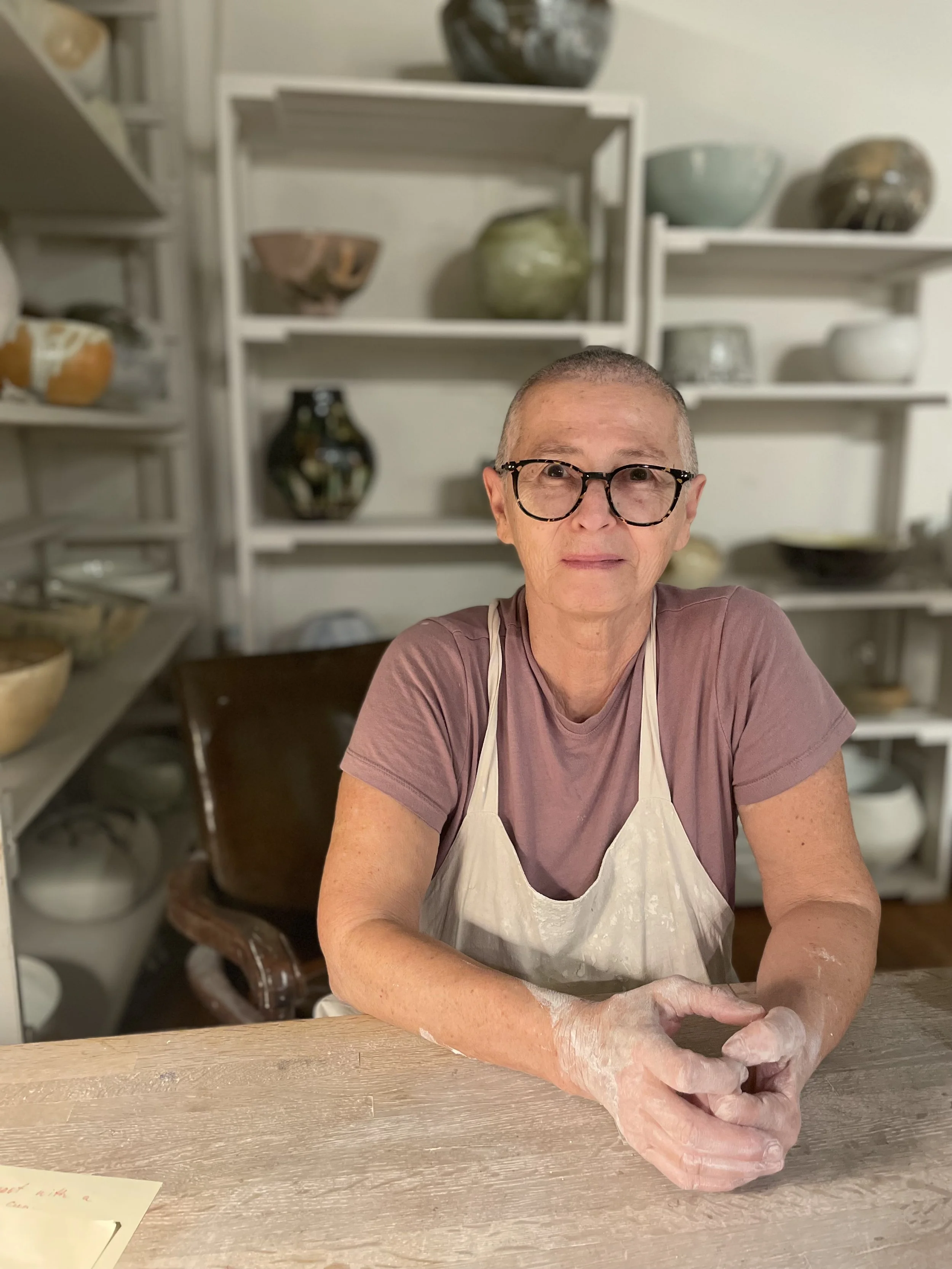
For 20 years, resident artist Gerbi Tsesarskaia has been in dialogue with porcelain, a material she describes as endlessly resistant to knowing fully, and one she's spent decades pulling, stretching, and testing. Her sculptural forms draw on the landscapes that have shaped her life: the pine-covered hills of Siberia's Lake Baikal, the stillness of the Armenian mountains, the watery grays and pale pinks of St. Petersburg. Before ceramics, Gerbi developed experience in electrical engineering, translation, and marionette-making in Budapest– a career history she says continues to inform who she is as an artist today.
"Kiln is my partner," Gerbi says of the unpredictable firing process central to her work, "sometimes benevolent, other times not so much."
In this interview, Gerbi opens up about her evolution from functional pottery to purely sculptural, conceptual work, and what two decades at Bakehouse have meant for her practice. Read more for her reflections on memory, transformation, and staying curious.
Gerbi is currently one of fourteen exhibiting artist at the South Florida Cultural Consortium Exhibition at Museum of Contemporary Art, North Miami. Each artist’s practice investigates the formation of identity through processes of accumulation, translation, and transformation, revealing how personal histories intersect with broader cultural and ecological narratives. The exhibition is on view until October 4, 2026.
Can you tell us about your artistic practice?
I work with an incredible material whose purity, radiant whiteness, extreme resistance to heat, exceptional durability, translucency keeps me forever bound to endlessly explore its essence. I never feel I know enough to stop this process of discovery. So I keep making forms to put it through yet another test again and again and I enjoy every stage of it.
What role does memory play in your creative process? Are you working more from feeling or visual recall?
Everything I create is a manifestation of the life experiences I go through continuously. All these experiences are stored in my psyche in the form of memories. Therefore memories are central to my creative process. Both feeling and visual recall are parts and parcels of those memories.
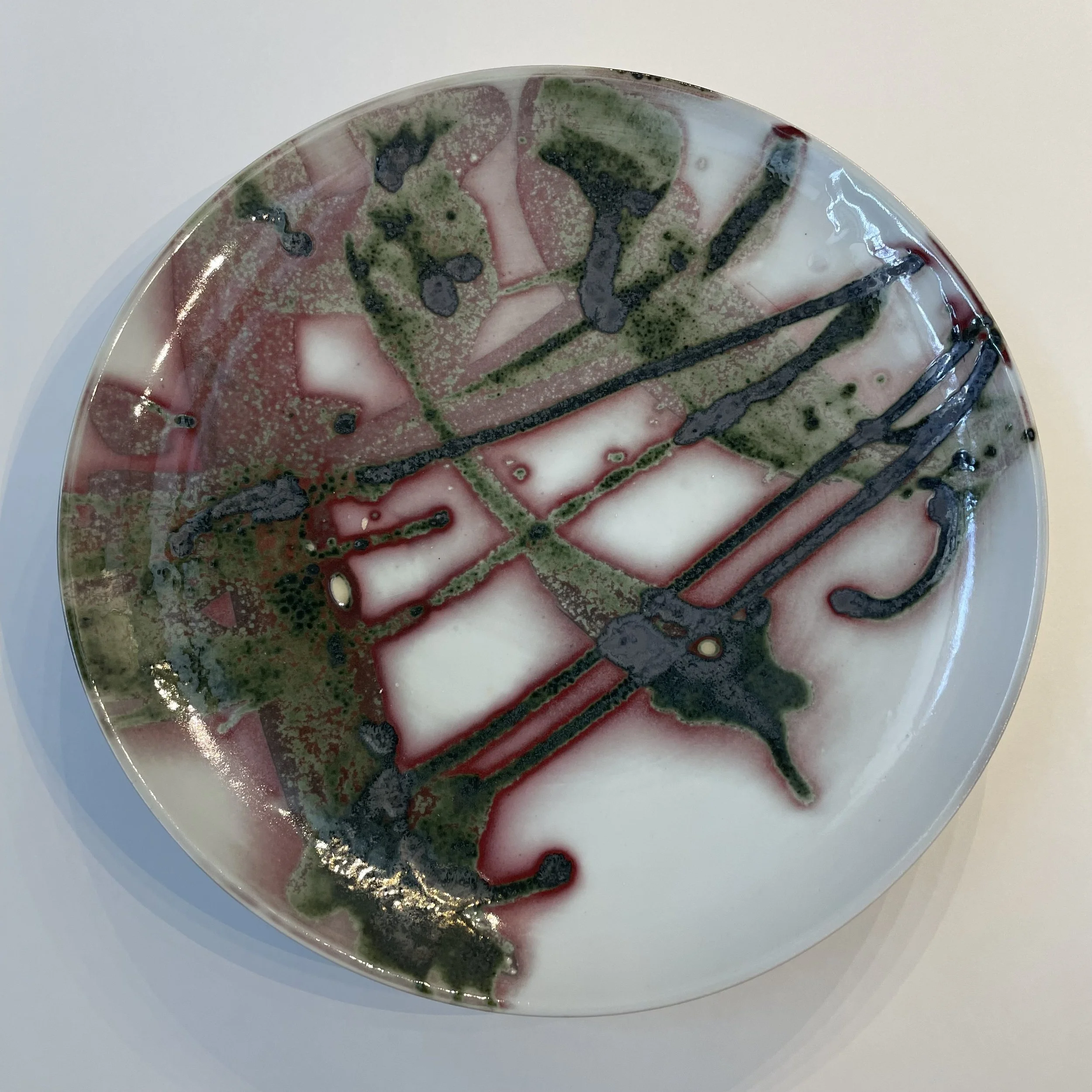
In your artist statement. You describe a very poetic process as imitating natural forces—winds, water, sand dunes. How do you capture that sense of erosion and transformation in a static object?
I pull, stretch and roll a white pliable mass of porcelain and set it in motion much like wind, waves of water or sand dunes would do with anything they find on their path or so I imagine it being subjected to the similar forces. I also use a lot of texture from natural sources and usually apply it while spinning the work on the wheel.
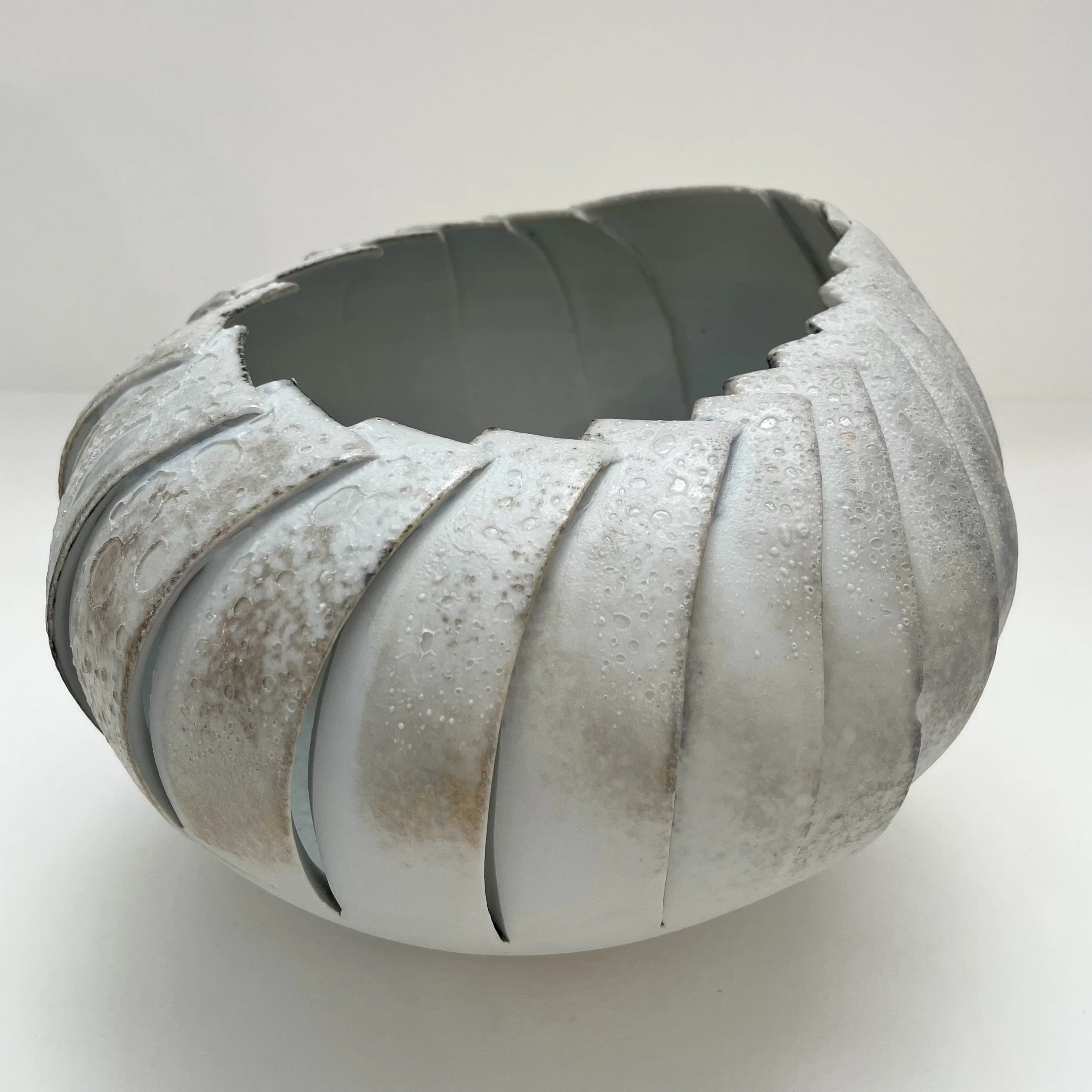
Your work draws deeply from the landscapes of Siberia, Armenia, and St. Petersburg. Is there a particular place that you return to most often in your imagination when you’re creating? How do you translate these vivid memories into your ceramic forms?
All three of the landscapes I mention are crucially important to me. Their essence finds its way in forms, structure and glazes of my work as well as in the conceptual frame of it.
You were an electrical engineer, a translator-interpreter, and a marionette puppet maker in Budapest until the 1990s before becoming a ceramicist. Do these experiences ever inform your art practice or the way you have led your art career?
Absolutely. All these experiences shaped me as a human I am and keep shaping me alongside the ones that keep coming my way.
Do you ever revisit Budapest physically, or does your relationship to these memories and places entirely through art?
I do revisit Budapest every year if I could. Unfortunately I am not able to physically revisit Siberia, Armenia or St. Petersburg but I do inform myself regularly about most of the important happenings within these regions.
You often fire pieces multiple times—what are you looking for during each stage of that process? How do you balance control with spontaneity in your practice?
I do have a certain look in mind when I decorate the forms with glazes. This part of the process is under my control. However, the firing I subject my work to is a highly sophisticated process with a great number of variables and to a considerable degree is unpredictable.
Kiln is my partner, sometimes benevolent, other times not so much. It has the power to alter outcomes. I try to stay open and receptive to the new unexpected surfaces and even alterations to the shapes but if the pieces don't show the absolute integrity I expect it must go back to the next firing or the one afterwards until I accept it completely and unequivocally.
Tell us about how you have developed as an artist since you began working at Bakehouse:
In the beginning my studio practice was almost exclusively centered around making pots with the goal to bring beauty into the everyday life of those who are open to it. I made objects of utility with a particular attention to immaculate craftsmanship, unique design, ergonomics, comfort and overall preciousness of the vessels of service.
With time my artistic practice shifted almost entirely towards purely sculptural conceptual work. Gradually the forms or rather the series of forms I made started to assume abstract qualities, devoid of any utilitarian purpose. The abandonment of functionality gifted me with the freedom to treat my work as a pure manifestation of life experiences I went through, as memory vessels, so to speak, allowed me to identify with the forms I created, to inhabit them.
How do you feel your art practice has developed or changed over the last 20 years? Does Bakehouse play a role in this?
With regards to the role of the Bakehouse I could only say that it is enormous. I treasure the possibility of having my own studio, the possibility to fire my work in the gas kiln which is hard to overestimate. Very few institutions have this tool available. I am thrilled to work in a community of artists, to have regular interactions with like-minded people, to learn from each other and offer service to the larger community outside the walls of the Bakehouse.
How do you stay inspired and motivated in your work?
Life around me and within me is going on and constantly inspires my response and my artistic input. I will only stop if I am not getting better in my responses or if my curiosity towards life diminishes.
Tell us about a personal artistic project or body of work that you are currently excited about:
I am currently working on a collaborative exhibition with a fellow Bakehouse artist Tonya Vegas curated by Adler Guerrier. The tentative title of the exhibition is “In Out and Beyond”. The theme explores the interconnectedness of inner and outer worlds, the micro and macrocosm of human experience and the ultimate oneness of seemingly separate realms.
From your perspective, can you describe why art practices like the ones at Bakehouse are important to have in Miami?
Art is an indispensable part of human life, it shapes culture, builds communities, helps educate future generations. It simply makes people's lives better, richer and more fulfilled.
How do you define success as an artist?
I would consider myself a successful artist if my art would touch people far and wide, if more of them would wish to live with it in their close environment, to contemplate it, to interact with it, to share it with others. If my artistic practice would sustain me without the need to support myself with something that doesn’t fulfill me and if I never lose the drive to become better with each day I practice my art.
You have been an established artist and an educator for several decades, and a Studio Artist with Bakehouse for 20 years. What advice would you impart on emerging artists now?
Stay true to yourself, do not compromise, do not cater to fashionable trends, work tirelessly, be curious, enjoy your work, share with others.
What do you hope to achieve in your career as an artist in the next five years?
I have a few ideas for future exhibitions. I would like to fulfill them, to see them materialize. I would like to visit a few places which I consider Ceramic Meccas, the most important ancient kiln sites in Japan, The city of Delft in the Netherlands, Meissen in Germany, Jingdezhen in China, St. Ives in Wales and many others.
Gerbi is one of fourteen artists included in the Cultural Consortium Exhibition at The Museum of Contemporary Art North Miami, on view until October 4, 2026.
Artist statement:
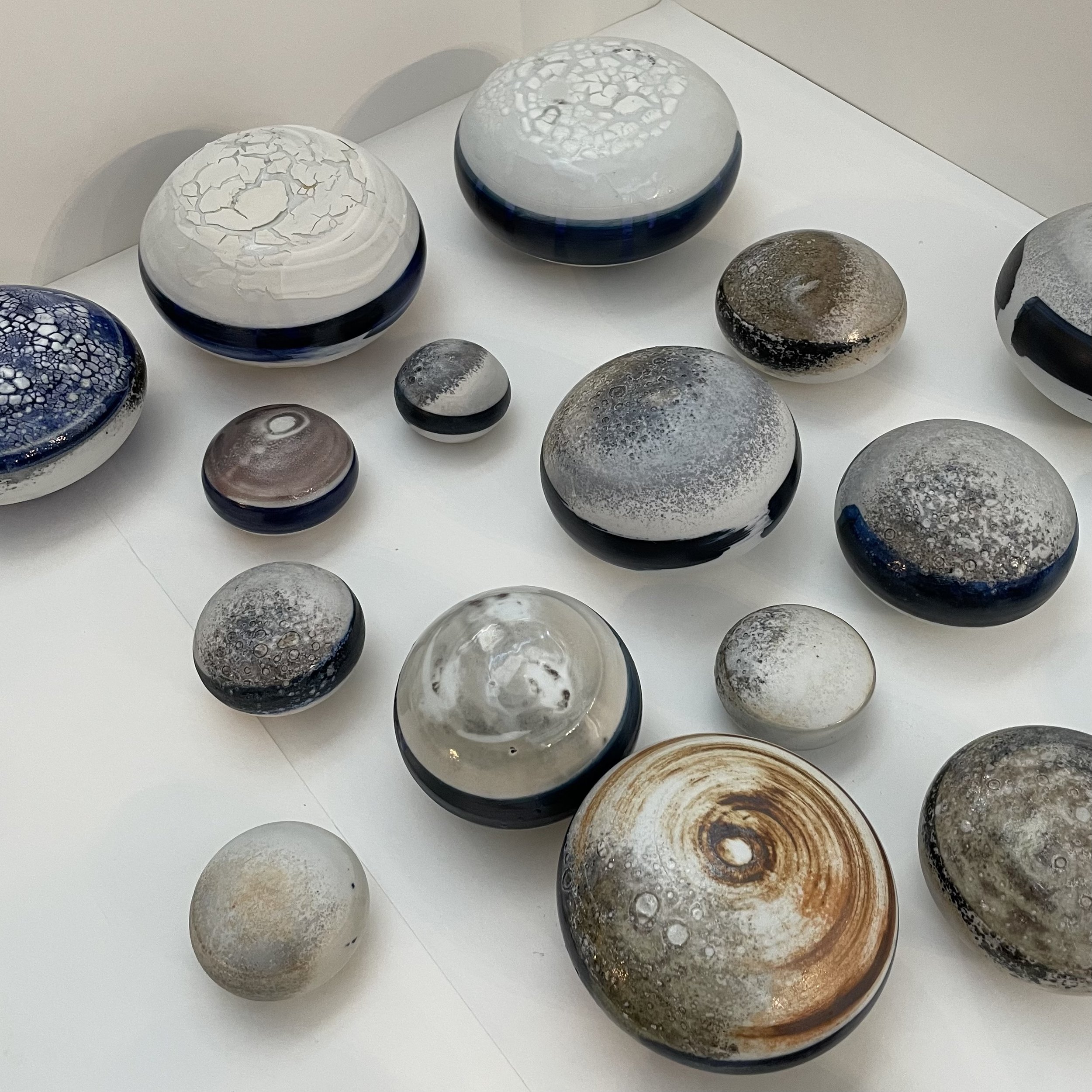
The world emerging from the interaction of Nature and the creative human spirit is the greatest source of inspiration for my work. Composite memories of pine-and cedar-covered hills surrounding the Baikal lake in Siberia, of the stillness of Armenian mountains, of the watery grays, pale blues and pinks of St. Petersburg’s magnificent buildings, of the curves of its countless rivers, canals, and bridges – all of these find their reflection in the forms and colors of my work. The techniques I developed to shape the forms resemble or imitate the workings of the natural forces: fierce winds, huge bodies of water and all-penetrating sand dunes, which can wear away and transform huge rocks. The medium I use is grolleg porcelain fired either in soda or reduction gas kilns. Quite often I take my work through a number of firings, combining both methods, until I reach the desired effect. In essence, my intention is to breathe life into a man made object and to give it the appearance of a creature blending into a natural environment, be it a sea shore, a forest or a river bank.
Artist Bio:
Gerbi Tsesarskaia was born in Zsitomir, Ukraine. After graduating from the Marine Technical University of St. Petersburg in 1980 with an M.S. in Mechanical Engineering, for four years she worked as an electrical engineer at "Elektrosila" Research Institute. In 1985 Gerbi moved to Budapest, Hungary, got married, and made a sharp turn in her career. After learning Hungarian she worked first as an art books seller, then later as a translator-interpreter, as well as a marionette puppet maker at the Budapest National Puppet Theater. In 1990 Gerbi moved to Florida where her husband pursued his doctoral studies at the University of Miami. In 1994 she joined the Ceramic League of Miami. At the CLM she first took, later taught courses in wheel throwing. In 2002 she was accepted to the graduate program at Florida Atlantic University and graduated with an M.F.A. in ceramics in 2005. After a brief period of teaching at FAU she moved her studio to the Bakehouse Art Complex, where she currently works as an independent artist. From August 2009 through 2019 she has been teaching ceramics courses at the University of Miami, Miami International University of Art and Design and Barry University as an adjunct instructor. Gerbi has participated in numerous national and international exhibitions including two world competitions in Korea and Rumania. Her work has been included in many private and two museum collections in Korea and Romania.